
Federal outlook: Congress steers toward closing controversial loophole
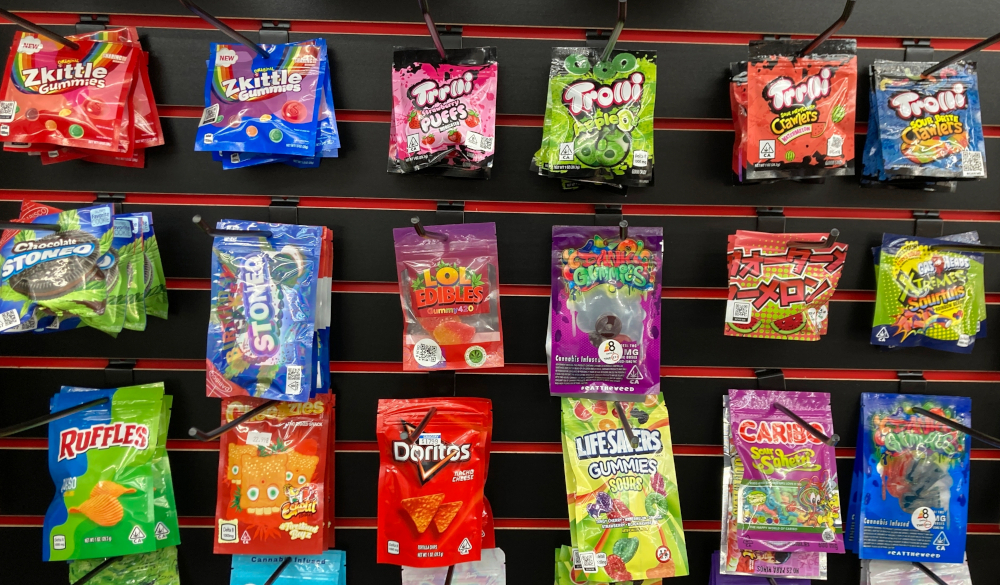
Action around intoxicating hemp products remained fast and furious this week, with federal lawmakers moving ahead on sweeping restrictions and several states escalating enforcement or facing major court decisions.
A House panel passed a bill that would effectively ban nearly all consumable cannabinoid products from federally defined hemp—yet left intact a clarifying note stating non-intoxicating items with “trace or insignificant” THC – such as CBD – are not the target.
The measure, approved 35-27 by the House Appropriations Committee, moves next to the Rules Committee before floor votes. If enacted, it would redefine hemp under federal law to exclude any consumable cannabinoid product containing detectable THC—or any other cannabinoid marketed to have similar effects—undermining the current 2018 Farm Bill’s 0.3 percent THC limit.
Rep. Andy Harris (R Md.), who chairs the Agriculture and FDA subcommittee, defended the language, saying it “closes the loophole” that has allowed intoxicating hemp goods to proliferate in convenience stores and gas stations. “Close the loophole while protecting industrial hemp,” Harris said, dismissing industry concerns that the bill would decimate legitimate businesses.
However, the Congressional Research Service concluded the bill would “effectively” prohibit hemp-derived cannabinoid products—including mainstream CBD items that typically carry trace THC. Despite a manager’s report amendment claiming no intent to ban non-intoxicating products, hemp advocates say the full bill’s language overrides that intent.
As hemp-derived intoxicants like delta-8 and other variants continue cropping up at the state level, industry leaders insist federal clarity is essential to aid state regulators. A timely federal resolution would reduce friction in state efforts, streamline enforcement, and bring a coherent national strategy.
With the bill now before the Rules Committee, analysts predict hearings and floor votes could happen before the end of summer. Should it pass both houses, a final package would head to the president, with regulatory guidance following—likely by late 2025 or early 2026 at the earliest.
Arizona: Court clears AG to enforce THC ban, industry appeals
In a swift ruling this week, Maricopa County Superior Court allowed Arizona Attorney General Kris Mayes to continue enforcing an explicit ban on hemp-derived THC product sales by unlicensed businesses. Judge Randall Warner denied a preliminary injunction sought by the Hemp Industry Trade Association (HITA). Warner ruled that Arizona law does not distinguish intoxicating hemp products from marijuana, mandating that they fall under the state’s cannabis distribution rules.
The ruling permits enforcement to proceed while HITA prepares an expedited appeal to the Court of Appeals. Meanwhile, AG Mayes’s office has distributed notices to smoke shops, gas stations, and convenience stores, warning against sales of products containing delta-8, delta-9, and other cannabinoid compounds without a dispensary license.
Industry leaders argue the ban contradicts federal protections under the 2018 Farm Bill and the 2018 Arizona Hemp Act. HITA’s legal counsel said the decision “overlooks federal law and the Legislature’s intent to foster a thriving hemp market,” and the group will pursue both court and legislative remedies.
Arkansas: Appeals court revives ban after injunction stays lifted
The Arkansas ban on intoxicating hemp has sprung back into effect, after a federal appellate court vacated a district court injunction on June 24.
Arkansas enacted Senate Bill 358 (Act 629) in April 2023, categorizing several hemp extracts as Schedule VI substances, but U.S. District Judge Billy Roy Wilson blocked enforcement just weeks later. Now, a three-judge panel of the 8th U.S. Circuit Court of Appeals has overturned that block, ruling that Arkansas’s law does not violate the 2018 Farm Bill or federal commerce law.
Judge Jonathan Kobes emphasized that while the federal law facilitates state hemp legalization, it does not require states to permit intoxicating cannabinoids. The ruling lifts the block in Arkansas and six other states under the 8th Circuit’s jurisdiction: Iowa, Minnesota, Missouri, Nebraska, North Dakota, and South Dakota.
Arkansas Gov. Sarah Huckabee Sanders hailed the decision as a “huge victory for the state” in a campaign to protect children from synthetic marijuana. Even Texas Gov. Greg Abbott cited the ruling in rejecting a bill that would have banned consumable hemp products in Texas, saying delays and uncertainty in Arkansas show why a national framework is needed.
South Dakota: Hemp products seized starting July 14 under new law
Enforcement begins July 14 under South Dakota’s House Bill 1125, which bans chemically modified cannabinoids such as delta 8, delta 10, HHC, THCP, and THC O. The law defines such compounds as products of chemical manipulation and imposes Class 2 misdemeanors for violations—up to 30 days in jail or a $500 fine per product.
Pennington County State’s Attorney Lara Roetzel issued a June 10 letter to Genesis Farms LLC, a licensed medical cannabis provider, warning of potential legal action unless all noncompliant products are removed. Violations will result in product seize and misdemeanor charges for each individual item.
Signed into law in early 2024 alongside protections for medical dispensaries and licensed entities, HB 1125 also carved out exemptions for naturally derived cannabinoids and topicals. Enforcement has been in planning since enactment, but bench officers now receive clear expectations to act.
South Dakota Attorney General Marty Jackley—who in 2024 joined 21 other AGs lobbying Congress to amend the Farm Bill—said the law will protect consumers, especially children, from dangerous synthetic cannabinoids often packaged as innocuous supplements.