
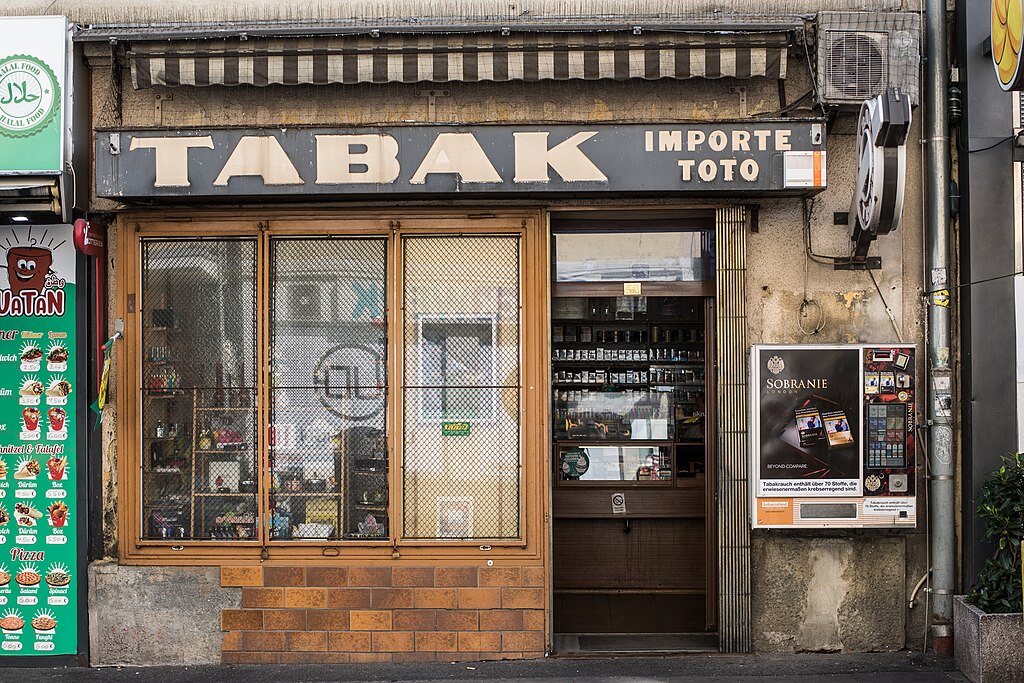
Austrian hemp stakeholders say they are preparing a constitutional challenge after the government approved an amendment that would move smokable hemp flowers under the country’s tobacco monopoly.
The amendment, approved by the Council of Ministers this week, cements a late-2024 Administrative Court ruling that placed hemp flowers under the Tobacco Monopoly Act, a finding customs officials interpreted to mean that only tobacconists and tobacco wholesalers may sell them. The restrictions take effect in January 2029.
“The expansion of the tobacco monopoly to include cannabis is unconstitutional and an impermissible interference with the freedom to conduct a business,” constitutional scholar Heinz Mayer, said at a press conference Wednesday. He argued that the government has failed to demonstrate any factual justification for such a move.
The three-year transition period allows existing hemp and CBD shops to continue operating until the end of 2028, but only if they secure a special hemp license from the agency that manages the Austrian Tobacco Monopoly. To qualify, shops must have been operating since the start of 2025 and must trade predominantly in hemp products.
‘Not a rescue, a death blow’
While officials say the transition is meant to give businesses time to adapt, hemp retailers and others who spoke at the press conference Wednesday say the measure threatens the survival of several hundred businesses.
“This is not a rescue, but in truth the death blow,” said Vienna retailer Lukas Bock, who said he has paid high taxes for years only to see the foundation of his business “simply taken away.” He added: “Hundreds of others are in the same situation as me.”
Klaus Hübner, chairman of the Austrian Cannabis Association (ÖCB) said the monopoly regime amounts to “inexplicable discrimination” against hemp shops, calling the framework effectively a “professional ban.” The association is demanding a standalone Cannabis Law with a coexistence model outside the tobacco monopoly.
Industry pushes back
Austria’s hemp flower dispute dates back several years, but sparks flew earlier this year when the Supreme Administrative Court affirmed that smokable hemp flowers fall under the Tobacco Tax Act, making them subject to a tobacco tax of 34% of the retail price. The ruling did not impact CBD oils, edibles, topicals, or other non-smokable products, which remain legal under EU rules as long as they contain less than 0.3% THC.
The ÖCB, newly formed this past spring, immediately disputed that interpretation and filed a complaint with the Federal Finance Court, warning that the policy amounted to an existential threat. That case remains pending.
Constitutional challenge ahead
Mayer, who issued a legal opinion for the ÖCB in April, also drew a parallel to a 2015 case involving e-cigarettes. “We are now in a situation similar to where we were 10 years ago with e-cigarettes. The Tobacco Monopoly Act is being expanded and supplemented with a new product. At that time, it was challenged and this view was confirmed by the Constitutional Court.” He said he is “convinced this will also be the case with legal hemp.”
Whatever the outcome of the pending Federal Finance Court case, Mayer said the matter will “definitely end up before the Constitutional Court.”
EU law remains clear: CBD is not a narcotic, hemp flowers under the THC threshold may be legally traded, and member states must follow single-market rules.
Sector braces for impact
If implemented, the 2029 monopoly shift would affect retailers, processors, distributors, and even pharmacies. Industry representatives warn that the restrictions could shutter hundreds of shops and eliminate more than a thousand jobs, potentially pushing consumers toward the illicit market through higher prices and limited access.
For now, the ÖCB is preparing for a constitutional battle that could determine whether Austria’s hemp sector survives in its current form — or finds itself absorbed into the country’s powerful tobacco monopoly.