
Hemp hit another roadblock in Brazil this week, as the National Health Surveillance Agency (ANVISA) asked the Superior Court of Justice (STJ) for an additional six months to decide whether to authorize hemp cultivation for medicinal purposes — effectively pushing the decision back to March 31, 2026.
The request, filed through the Attorney General’s Office (AGU), has frustrated researchers, farmers, and industry advocates after years of missed deadlines and shifting positions. ANVISA failed to comply with a September 30 deadline imposed by Justice Regina Helena Costa, who ruled in June that the agency must either authorize or deny planting by the end of September.
“The extension further delays research development, which is worrying,” Daniela Bittencourt, executive secretary of a hemp committee at EMBRAPA, the Brazilian Agricultural Research Corporation, told the financial website Economia. “We need to advance regulation and establish a definition for other industrial uses of hemp, opening up opportunities for the agricultural sector to cultivate cannabis for various purposes,”
Leadership change
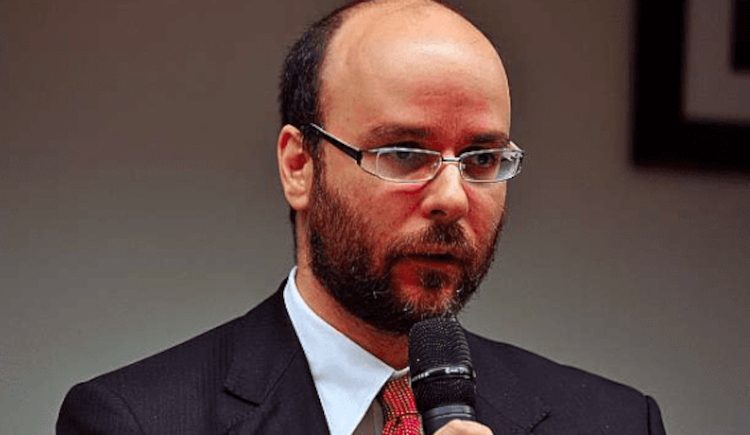
Industry observers suggested that a recent change at the top of ANVISA may have contributed to the agency’s hesitation. Leandro Pinheiro Safatle took over as president only last month, leaving him to make a politically sensitive decision on a controversial file with little time for preparation.
Anvisa said its request for more time reflects the “technical complexity” of cannabis cultivation and the need to expand dialogue with stakeholders. The agency also signaled it may elevate the matter to the Council for Sustainable Economic and Social Development — the “Conselhão,” which includes government officials, business leaders, and civil society.
Billions at stake
Brazil is expected to spend more than $150 million this year on cannabinoid-based medicines, most of which are imported. A study by think tank Instituto Escolhas projects the domestic market could grow sixfold by the early 2030s.
Rafael Arcuri, president of the National Industrial Hemp Association, said the delay undermines Brazil’s strategic interests. “Hemp production for medicinal and other uses is a matter of national sovereignty, since we can produce APIs (active pharmaceutical ingredients) from the plant,” he told Economia. “Brazil is highly dependent on imports of APIs. If there’s a war, for example, we run a serious risk of medicine shortages, and developing the industry, including hemp, is strategic.”
Regulatory saga
The impasse follows years of turbulence for hemp in Brazil. In late 2024, the STJ ruled unanimously that low-THC cannabis does not fall under Brazil’s Narcotics Act and ordered ANVISA to establish regulations within six months. But just days before the May 19, 2025 deadline, the agency abruptly pulled the hemp item from its agenda, citing a vague “need for alignment.”
That move stoked fears that regulators intended to restrict hemp to pharmaceutical channels, excluding industrial applications such as textiles, food, construction materials, and bioplastics. Stakeholders pointed to Uruguay and Colombia as examples of broader licensing systems that encourage multiple markets.
Bittencourt of Embrapa has long argued that Brazil’s conditions give it unique potential to lead globally in hemp production. “Brazil has all the conditions to be a major hemp producer: suitable climate, fertile soils, and millions of hectares of degraded pastures that could be recovered with this crop. But the first challenge is regulation,” she told HempToday in August.
Industry coalitions waiting
Amid the uncertainty, public, private, and nonprofit actors have continued preparing. Embrapa has partnered with Instituto Ficus and cannabis accelerator The Green Hub in a project called HempTech Brasil, aimed at developing research and innovation to support sustainable hemp production.
Instituto Ficus, founded in 2020 to advocate for cannabis regulation, has meanwhile pledged to bring the debate to the Conselhão in an effort to broaden the political conversation beyond health and into industrial and economic dimensions.
Local experimentation
Despite federal inaction, some states have moved ahead. Since last year, São Paulo has allowed the distribution of cannabinoid-based medicines under the Unified Health System for patients with rare epilepsies, reaching 580 families. State deputy Caio França, who authored the law, said the federal government’s refusal to act creates “an economic apartheid, in which only those with money can afford these medications.”
For now, the STJ has given no new deadline to Anvisa. Justice Regina Costa is expected to review the agency’s request, but stakeholders say yet another extension underscores Brazil’s inability to seize the opportunities of a hemp economy.
“Both large industries and family farmers can benefit,” Bittencourt said. “But without the rules, none of this is possible.”