
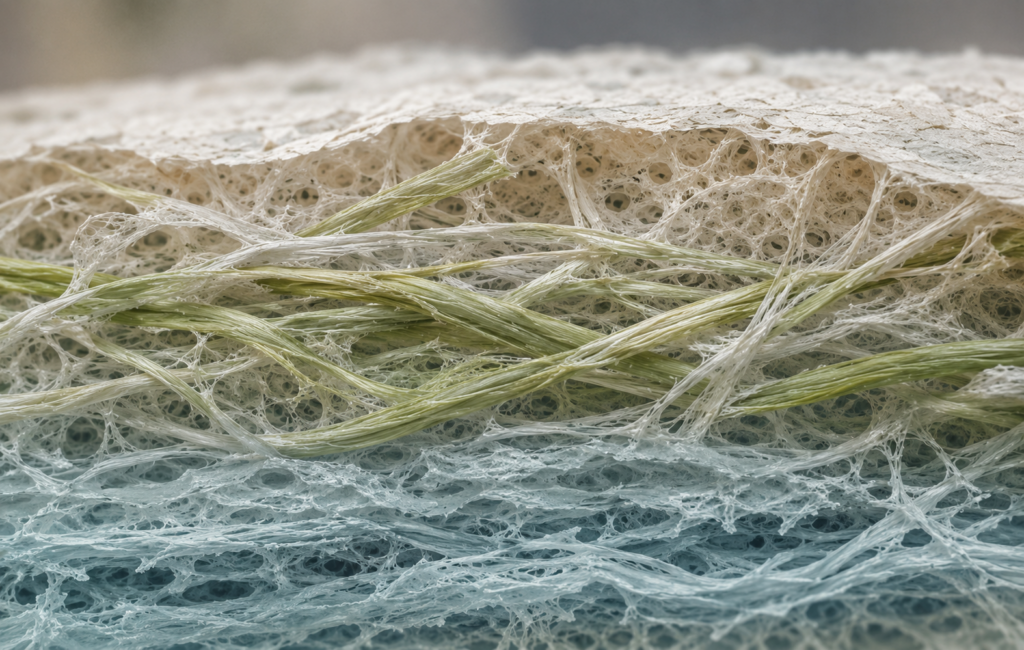
Raw material from hemp stalks and roots could strengthen recycled paper, extending the life of reused paper fibers and improving mechanical performance in one of the world’s largest paper-recycling markets, according to researchers in Brazil.
Scientists at the Department of Forestry Engineering at the Federal University of Viçosa (UFV) are studying how raw material from hemp stems, branches and roots can reinforce recycled paper products that typically weaken after repeated reuse cycles.
“In addition to technical and economic gains, the use of hemp fibers as reinforcement represents an important advance from a sustainability perspective, increasing recycling efficiency and reducing pressure on traditional forest raw materials,” said project coordinator Marcelo Moreira da Costa.
Researchers said the work could have broad implications for Brazil’s recycled-paper sector — part of a domestic paper and paperboard market valued at roughly US$10 billion annually. The country processes about 6.6 million tons of recycled fibers each year, according to the Brazilian Tree Industry Association.
Fiber strength
Conventional cellulose fibers degrade with each recycling cycle, becoming shorter and weaker over time, reducing strength and performance. The researchers said fibers from hemp show greater resistance during recycling, potentially allowing paper products to survive more reuse cycles before degradation.
The project is now in the final phase of consolidating mechanical test results from papers produced with different hemp-fiber concentrations.
Sustainability
Brazil ranks among the world’s largest producers of recycled paper and cardboard, making durability improvements potentially significant for the country’s industrial paper sector.
The research also reflects growing interest in industrial hemp as a feedstock for pulp, packaging and other fiber-based applications. Hemp’s long bast fibers have historically been valued for strength and durability in specialty paper uses, although large-scale commercial adoption has remained limited by cultivation restrictions and processing economics in many countries.
Scale-up work
The UFV-Embrapii project began in February 2024. Researchers said an initial batch of 14 seeds produced more than 4,000 seedlings within four months through a large-scale cultivation method developed during the project.
The initiative received total investment of roughly R$932,000 (US$173,000) including R$307,000 (US$57,000) from the Brazilian Company for Industrial Research and Innovation (Embrapii), which contracts with the federal government to offer small businesses and startups access to a network of 90 scientific and technical centers of excellence throughout the country.
Patent sought
The research project was developed through UFV’s Embrapii Unit in partnership with startup Buds INC, which contributed roughly 35% of the financing. Embrapii invests up to 50% of total project value in projects that lead to the introduction of new products and processes.
The research has already resulted in a patent application, according to project partners, who said the cultivation and processing method developed during the project could have export potential for hemp producers in China, the United States, Canada and EU countries.