
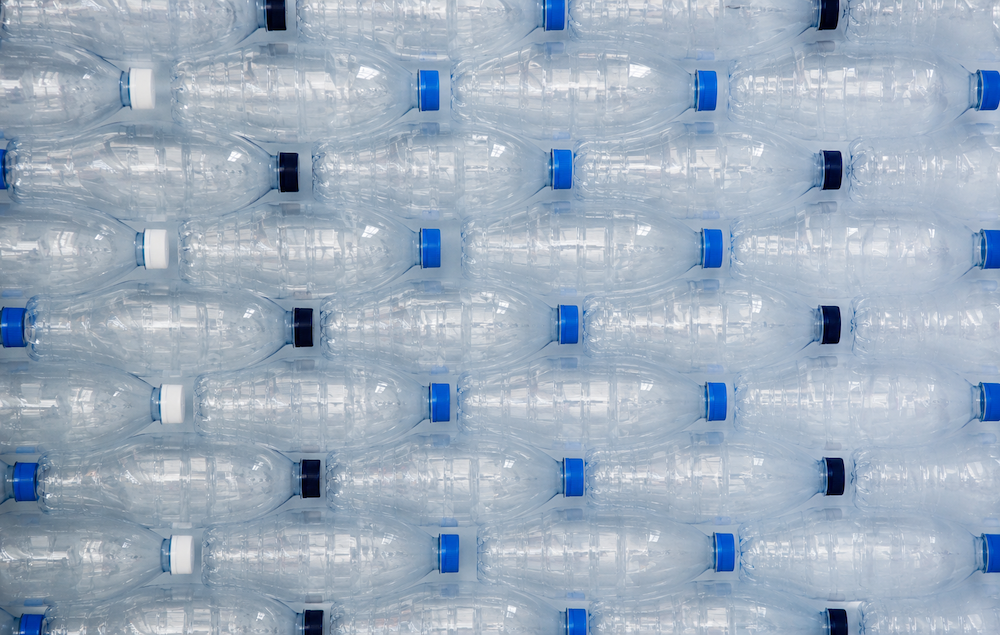
U.S. researchers say a new plastic made from CBD matches key performance characteristics of polyethylene terephthalate (PET), the world’s most widely used packaging plastic, signaling a potential new industrial market for hemp.
The researchers, from Purdue University and the University of Connecticut, said the material, known as polycannabidiol carbonate (pCBDC), combines heat resistance, strength and processing characteristics comparable to PET while relying primarily on renewable plant-based feedstocks.
The study was published in the peer-reviewed journal Chem Circularity, a Cell Press journal published by Elsevier.
The findings are significant because replacing PET – a sector valued at about $40 billion globally – has proven difficult despite years of research into bio-based plastics. PET is used extensively in bottles, packaging films, textiles and industrial applications because it combines relatively low cost with high strength, heat resistance and manufacturing flexibility. Most renewable alternatives sacrifice one or more of those properties.
Researchers reported that the hemp-derived polymer contains roughly 92% bio-based content and can be produced directly from CBD without the multiple chemical conversion steps required by many other bio-based plastics.
Substituting PET
Laboratory tests showed the material had heat resistance similar to PET. Films made from the polymer also achieved strength and stiffness comparable to PET, suggesting it could perform in many of the same applications.
The material also demonstrated unusually high stretchability during processing, a characteristic that has limited many previous bio-based PET alternatives. Researchers said pCBDC could compete with PET, polystyrene, and acrylic plastics in applications ranging from packaging and fibers to electronic substrates and insulating materials.
Value chain fit
For the hemp industry, the research points to a potential high-value industrial outlet for CBD that is largely disconnected from food, nutraceutical and pharmaceutical markets – where the compound is running up against tighter and tighter restrictions in many parts of the world.
The authors noted that CBD can be extracted from hemp and used directly as a polymer building block without prior chemical modification. That could reduce processing steps and associated emissions compared with some other bio-based plastics.
The work also aligns with broader efforts to develop non-food feedstocks for advanced materials. While polyethylene furanoate (PEF), another emerging bio-based plastic, is often cited as a leading PET replacement, its production depends on sugars derived from agricultural crops. The researchers argue that hemp-derived CBD offers a complementary pathway that avoids direct competition with food supply chains.
Cost challenge
The study demonstrates technical feasibility rather than commercial readiness, acknowledging that CBD remains substantially more expensive than the petrochemical feedstocks used to make conventional PET materials.
The authors suggested the material would likely first target higher-value applications where resin costs account for a relatively small share of overall product costs – specialty electronics, advanced films and technical materials where sustainability requirements justify premium pricing. The economic case would strengthen if CBD prices continue to fall, they suggested.
Missing context
The research team did not conduct a full life-cycle assessment or techno-economic analysis, noting that such evaluations would require assumptions about future hemp production, CBD pricing, solvent recovery and manufacturing scale. As a result, the environmental and economic advantages of pCBDC remain largely theoretical at this stage.
The polymer was also produced using triphosgene, a chemical commonly used in laboratory polymer production. Although the authors emphasized that the compound is fully consumed during manufacturing and said greener production routes are under development, large-scale commercialization would require further process optimization.
The research team said future work will focus on more sustainable manufacturing methods, including processes based on carbon dioxide-derived intermediates and solvent-reducing melt-phase production systems. They also plan to further investigate recycling pathways and large-scale processing techniques.