
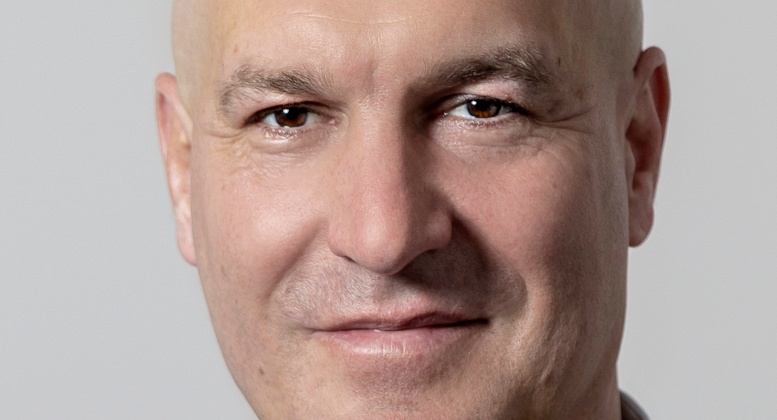
INTERVIEW: Daniel Kruse is Chief Executive Officer of SYNBIOTIC SE, a publicly listed European holding company based in Düsseldorf, Germany. A serial entrepreneur, Kruse has founded several cannabis and hemp businesses and brings nearly 30 years’ experience in the sector. He has served on the Board of the European Industrial Hemp Association (EIHA) since 2013 and has been its President since 2019. Kruse is also Vice-Chair of the Federation of International Hemp Organisations (FIHO) and works closely with the German Cannabis Industry Association (BvCW).
Hemp Today: You’ve said SYNBIOTIC expects to reach break-even by the first half of 2026 at the latest. What has put you on that trajectory?
Daniel Kruse: The first decisive step was a thorough cost-optimization program. We have significantly reduced our operating expenses without compromising product quality and customer orientation. In parallel, we relocated key operations to Düsseldorf, centralized logistics and synchronized the activities of our portfolio companies.
HT: You describe your approach as “buy-and-build”. What exactly are you buying, and how are you building?
DK: As a holding company, we make targeted investments in promising businesses within the medical cannabis and industrial hemp industry. The aim is to unlock profitable synergies across the entire value chain. Take our acquisition of Ilesol Pharmaceuticals in Croatia earlier this year: it closed a gap in our supply chain by giving us in-house, EU-based production. We can now manufacture CBD isolates carrying a “Made in EU” label – a perfect fit with our pan-European strategy. The transaction not only secures supply and boosts sales potential, it also makes SYNBIOTIC more attractive to large, strategic investors from outside Europe.
HT: You have integrated several companies recently. How has that accelerated your strategy?
DK: The integration of WEECO Pharma is a prime example. WEECO has dramatically strengthened our presence in medical-cannabis distribution. Acquisitions like this create instant synergies and translate into revenue uplift almost overnight.
HT: What sets SYNBIOTIC apart from other publicly traded cannabis groups?
DK: First, our purposeful diversification across all cannabis and hemp subsectors and along every stage of the value chain. We have assembled a robust European portfolio of seasoned businesses that capture growth while mitigating risk for investors. Secondly, our entire corporate strategy is built on targeted acquisitions and the seamless integration of new business areas, generating synergies in administration, production and sales. This offers our investors the exceptional opportunity to fully capitalize on these rapidly growing cannabis and hemp markets in Europe and Germany.
HT: How important is product innovation within your medical cannabis division?
DK: It is absolutely crucial. This year we launched Germany’s first medical-cannabis pastille – a discreet, user-friendly format that resonates with patients. It is a great illustration of how SYNBIOTIC combines pharmaceutical-grade production with consumer-centric design. As the market matures, innovations like this will give us a clear competitive edge.
HT: You have brought IRIS Capital on board as a strategic investor. What does that partnership add?
DK: IRIS Capital is a long-term growth investor with deep roots in the digital economy. Their commitment validates our model, and their data-driven expertise sharpens our EU expansion plans in anticipation of future regulatory openings. The capital is welcome, but the strategic insight is even more valuable.
HT: It looks as though medical cannabis will account for a growing share of your revenues. What is your strategy for that segment?
DK: Demand in the medical cannabis sector is rising sharply following the partial legalization in Germany. Therefore, we have a strong focus on the fast-growing medical cannabis market segment, backed by regulatory momentum and increasing patient access. We are targeting both prescription-based therapeutics and emerging OTC products. Furthermore, we see more European countries following the German legalisation, lately Slovenia. In addition to prescription and OTC products, we offer a comprehensive home-grow portfolio – seeds, cuttings and cultivation accessories – to serve patients who prefer to grow their own medicine.
HT: SYNBIOTIC has unusually deep roots in hemp. How important is hemp within your all-cannabis strategy?
DK: Hemp is fundamental. Our hemp and CBD businesses currently generate about 40 % of group revenue. They supply sustainable raw materials and finished goods ranging from cosmetics and foods to animal feed and accessories. These are mature companies (e.g. Hempro International and SOLIDMIND Group), well-established in their niches, ready to scale as the wider hemp market re-accelerates. Regulatory advances, such as the expected German industrial hemp liberalization law and the EU approval of CBD as a novel food, are opening up enormous commercial potential. Currently, demand for hemp food and hemp feed alone is showing an increase of 300 to 400 percent this year compared to last year. Meanwhile, our medical-cannabis unit, bolstered by the WEECO acquisition, is growing rapidly and will play an increasingly prominent role.
HT: You now operate in several EU member states. How significant is the “Made in Europe” label?
DK: Extremely. For example, owning Ilesol Pharmaceuticals means we can have in-house, EU-manufactured CBD isolates, extracts and white-/private-label products for cosmetics and food supplements. That guarantees full regulatory compliance and strong market acceptance, especially in health and wellness categories where consumers and regulators alike insist on transparent, regional supply chains.
HT: What impact has Germany’s Cannabis Control Act (CanG) had on SYNBIOTIC?
DK: CanG is a game changer, already driving higher demand across several of our verticals. Our buy-and-build model allows us to move quickly and confidently to seize these new opportunities. With its clear focus on two forward-looking markets, regulatory foresight and strong operational positioning, SYNBIOTIC is excellently positioned to sustainably implement its planned growth and establish itself as the leading investment platform in the European cannabis and hemp industry.
HT: There are efforts to remove of the so-called “intoxication clause”. What does that mean in practice and why is this so important? Is the legal landscape for CBD improving?
DK: Removing the clause will finally bring a sizeable grey market into the legal fold. CBD flower is hugely popular in Germany – think of it as the equivalent of low-alcohol beer – and the market is worth several hundred million euros. Once the Industrial Hemp Liberalization Act is enacted, hopefully in 2026, hemp flowers can be marketed as herbal smoking products under the Tobacco Products Directive, while preparations and formulations will also be covered. Classic CBD oils will become fully legal once Novel Food dossiers are approved and sector-specific regulations observed. And let’s not forget hemp leaves for teas and infusions – one of the largest untapped categories in the EU.
HT: You went through the CBD crash, and you’ve been at the center of the CBD “novel food” process in both Europe and the UK. How do you view that sector as it rebounds?
DK: The market for hemp extracts and CBD isolates alone is a multi-billion-euro opportunity. The cosmetics industry has already embraced these ingredients, and demand is rising. Should the European Commission approve the pending Novel Food applications in the coming years, we expect demand in the food supplement segment to multiply.
HT: Finally, what is the growth potential for “true hemp” – the purely industrial, non-flower applications?
DK: Enormous. Sectors such as food, feed and construction materials are often underestimated. Progress has been hampered in Germany by the intoxication clause, which restricted cultivation and processing, but change is on the way and we are well positioned. With the right regulatory tweaks, industrial hemp can become a cornerstone of a sustainable bio-economy. It is a sleeping giant that is just beginning to wake up.