
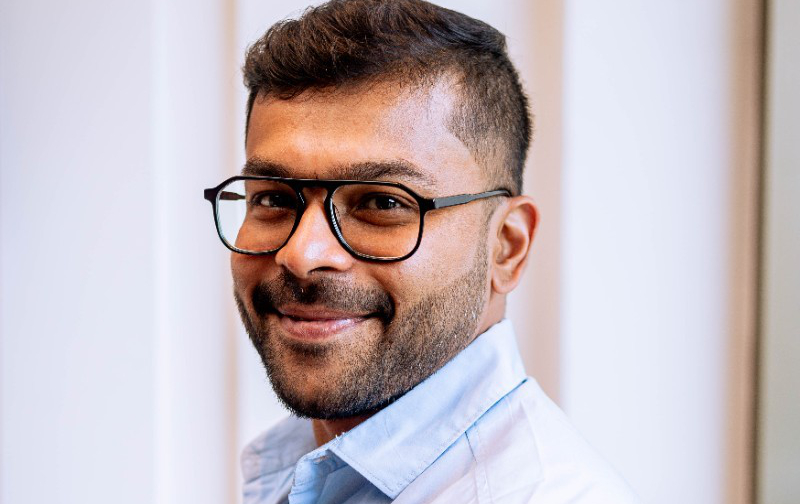
INTERVIEW: Vikramm Mitra is co-founder and managing director of Delta Botanicals & Research, an India-based cannabis research firm. He is leading a government-funded project to develop stable cannabis genetics, aimed at enabling compliant industrial hemp production and supporting pharmaceutical development in India.
HempToday: What does this government grant signal about India’s direction on industrial hemp specifically?
Vikramm Mitra: First, it signals a massive yet silent step toward recognition of hemp as an agricultural commodity. Second, it signals the government’s interest in recognizing cannabis landraces as an important part of India’s biodiversity. Third, and most importantly, it reflects growing interest within the country’s research and development community – particularly in top government institutions like the Council of Scientific and Industrial Research (CSIR) and the Indian Council of Agricultural Research (ICAR) – to address existing challenges in the hemp industry such as standardization, seeds, cannabinoid extraction and fiber.
HT: You’ve said stable genetics are the foundation. What specifically are the challenges in India’s seed supply?
VM: Uttarakhand was the first Indian state to implement a commercial cultivation policy in 2016, and more than 30 licenses have been sanctioned for industrial hemp cultivation for fiber and seed. Among them, only one company has been successful in developing a stable fiber variety.
Other license holders have not been able to cultivate the crop profitably or commercially due to the lack of stable, low/non-narcotic hemp genetics for seed and fiber that are suitable for outdoor field conditions, while performing optimally and remaining compliant with the 0.3% THC threshold.
Because of this, companies in the hemp seed and fiber sector face inconsistent supply and pricing, which has inhibited large-scale production and adoption of hemp-based food and skincare products. The pharmaceutical industry is also unable to conduct research on phytopharmaceuticals due to the absence of stable medical-use genetics.
By solving this foundational problem, Delta can help achieve the larger goal of developing a full ecosystem.
HT: From a business standpoint, what changes if India solves the genetics problem?
VM: From a business perspective, there will be a ripple effect across industries if India solves the genetics problem. We would see a stable, standardized raw material supply, followed by stabilization of raw material prices.
This would lead to gradual but eventual adoption of hemp seed- and fiber-based products by large Indian companies in FMCG, construction, sustainable textiles and fashion, and automotive industries.
HT: How far away is India from producing compliant, scalable industrial hemp at commercial levels?
VM: India could reach commercial levels within 5 to 7 years. However, this depends on how central and state governments navigate the THC threshold issue and allocate funding for processing infrastructure.
India is a treasure trove of cannabis genetics, and institutions in the north that have done a phenomenal job collecting germplasm. Many textile research institutions are also working on cost-effective fiber processing technologies.
However, central, southern, northeastern and western regions need to open up to achieve real scale, as that’s where access to large land banks exists.
HT: What are the biggest regulatory or structural bottlenecks holding back industrial hemp development in India today?
VM: The adoption and implementation of scientific data in policymaking, particularly around THC thresholds. Second is the apparent lack of awareness among policymakers about pre-prohibition frameworks, when well-structured regulations supported commercial cultivation for recreational, industrial and medical use.
On the industrial hemp fiber side, the structural bottlenecks include the lack of cost-effective, sustainable fiber extraction technology and the absence of large-scale processing units – either in Uttarakhand, where policy exists, or in major textile hubs where raw hemp fiber can be processed into yarn.
HT: Are those constraints easing, or is progress still slow?
VM: Yes, they are easing. From my experience over the past 15 years – and setting aside personal bias around timelines – I would say regulatory change in India has accelerated compared to earlier periods. However, from a business perspective, I still wish progress were faster.
HT: How should international investors or partners view India right now: emerging opportunity or still too early?
VM: They should view India as an emerging and unique market opportunity. This is the right time to enter for players looking to invest and establish a strategic position while policies are still being shaped.
HT: What needs to happen – scientifically and regulatorily – for CBD-based products in India to move from loosely defined formulations to consistent, clinically supported medicines?
VM: From a regulatory standpoint, India has a unique advantage. Unlike other countries where CBD was the lowest-hanging fruit, India allows whole-plant Vijaya (cannabis leaf) extract-based Ayurvedic medicines containing multiple cannabinoids, not just CBD.
However, regulations need to evolve further to allow the commercial use of cannabis flowers – not just leaves – for medical purposes.
Scientifically, this creates an opportunity to study the full spectrum of cannabinoids, terpenes and flavonoids in whole-plant extracts. But more data is needed on the efficacy of Ayurvedic polyherbal formulations to establish safety benchmarks aligned with modern medical standards.
We also need large-scale clinical data on the effectiveness and safety of plant-based cannabinoids across the Indian patient population. These steps are essential to move from loosely defined formulations to consistent, clinically supported medicines.
HT: Is there a viable OTC CBD market emerging under Ayurveda, or will regulators push the sector toward stricter medical positioning?
VM: Regulations are evolving, and yes, they are gradually pushing toward stricter medical positioning – for example, new licensing requirements mandating preclinical safety data for Ayurvedic formulations containing cannabis leaf extracts.
At the same time, a viable and scalable market exists for whole-plant cannabis (Vijaya) extract-based products. Companies are working creatively across formats such as gummies, softgels, oils, edibles, smokables and tinctures. While these are approved for medical use, they are often used in a lifestyle or quasi-recreational context.
HT: For companies outside India, where are the most realistic entry points into the country’s hemp or cannabis value chain?
VM: The medical/wellness segment and the hemp fiber industry. Most importantly, companies need to develop India-specific strategies that reflect the country’s unique market dynamics.