
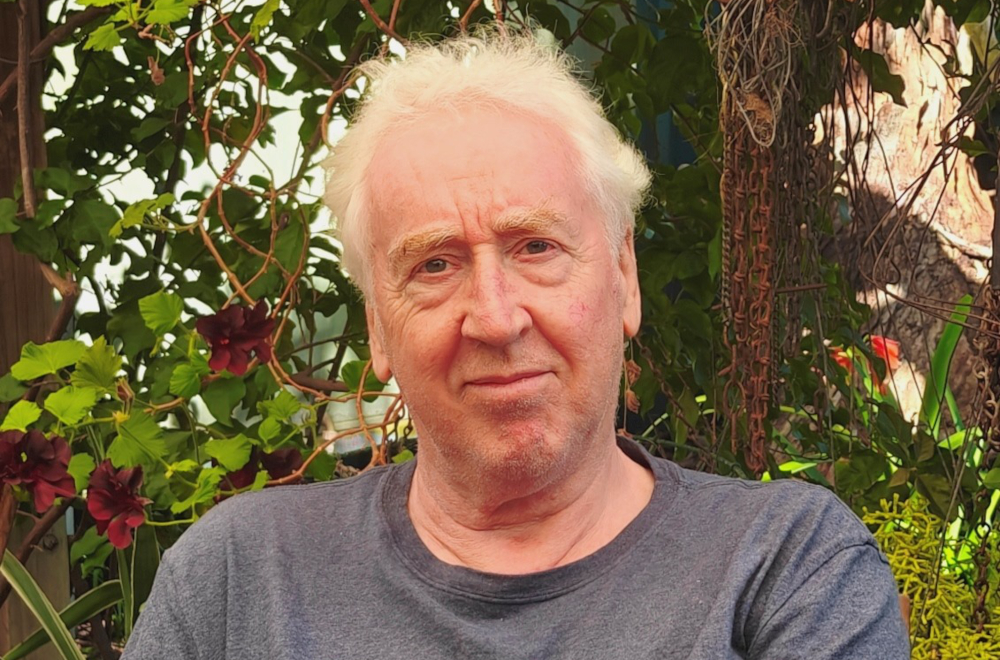
INTERVIEW: Bernard Thomson is executive officer of the Australian Hemp Council, where he works to build robust hemp value chains and promote sustainable cultivation and processing standards across Australia. He entered the industrial hemp sector in 2017 after a chance encounter with hemp producers at a farmers market led to his involvement with the South Australian Hemp Association, later joining its executive committee as treasurer. Thomson also serves as treasurer and a board member of Economic Reform Australia, Rethinking Economics Australia and Public Money Australia, and founded philosophy-of-freedom.au, a platform based on the work of Rudolf Steiner.
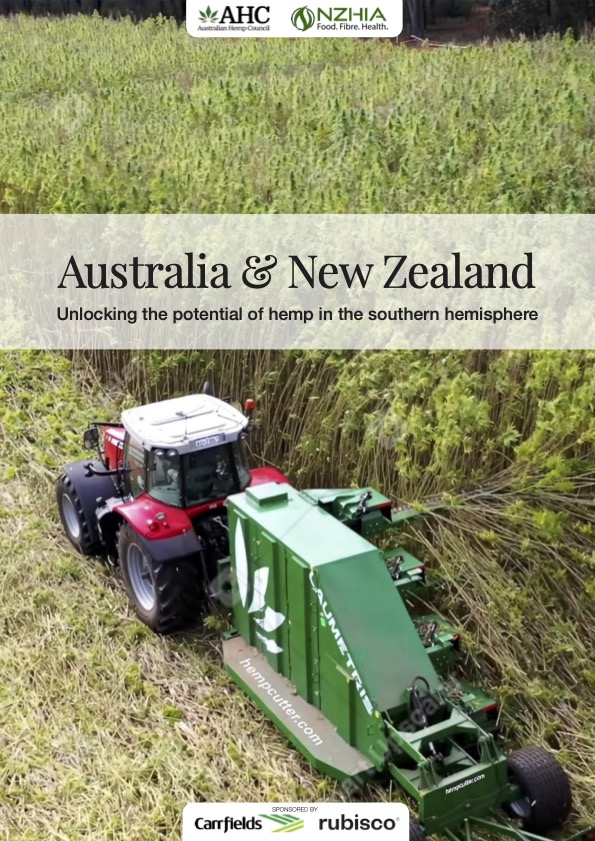
HempToday: Was there anything that came out in the new Australia & New Zealand Hemp Report that surprised you?
Bernard Thomson: Not really, as I try and keep an eye on developments and listen to reports as they circulate. However the report did put for me into greater focus the need for hub infrastructure design and funding as well as the risk inherent in a processing facility relying on a consistent volume and quality of an agricultural crop. Hence the location of hubs will also need to identify their climate risk profile, drought, flooding etc. I found reviewing information that I am to some extent already acquainted with is a stimulus to gain more clarity and discover new questions.
HT: The report highlights strong growth potential, especially in building materials and fiber. What do you see as the top opportunities for Australian hemp over the next three to five years?
BT: I see a number of initiatives where the planning has become more mature and comprehensive. Market potential is no longer sufficient and product design to meet real market demands is moving ahead. At the same time the market also needs to develop and this does present some risk for those who jump in early. That is where government or local council support can make a significant difference. I think we are past the corporate hero model and the sharing of risk across the value chain creates a stronger foundation for success.
HT: The report flags regulatory fragmentation and thin processing capacity as major constraints. What policy or infrastructure changes would most accelerate industry scale-up?
BT: Clearly public sector recognition of the contribution that industrial hemp can make will be a great boon. This includes its contribution to rural industry, agriculture more broadly as a rotational crop, but also carbon sequestration and remediation of contaminated soils. With this recognition can come practical support with funding for research, technology and market development.
HT: Processing bottlenecks remain the biggest hurdle for growers. How realistic is a move toward regionally distributed processing hubs?
BT: As I suggested above regional hubs are essential for economic viability with bulk products like fibre and hurd. They also need to be located with good access to freight infrastructure for market access, and in regions where environmental risks, especially of drought or extreme weather, is manageable.
HT: Hemp-based building materials appear to be one of the most promising demand areas. What standards or policy settings are needed to unlock this market at scale?
BT: Greater familiarity with the potential of hurd and fiber based products within the construction sector will be a good start. These products need to meet industry recognized specification standards. In addition, public policy which targets the carbon footprint in the construction industry can significantly raise the profile of hemp based products. Most of the carbon emissions in the construction industry (approx. 18% of total emissions in Australia) are associated with embodied carbon.
HT: How do you balance the goal of building strong domestic hemp supply chains with the growing interest in exporting raw or semi-processed hemp products?
BT: I think we need to respond to the immediate conditions and opportunities, but always keep in mind that selling products into local markets reduces the cost of freight (and emissions).Transport costs do not improve the product itself. At the same time we can’t simply replicate manufacturing technology everywhere so we need to specialize in some areas, and that means we move products around.
Most countries talk up the virtue of exports but in my view it makes little sense for similar products to pass each other on the high seas bound for each other’s ports.
HT: You’ve emphasized environmental stewardship and community-based economic models. How do these values shape your priorities for hemp development beyond commercial growth?
BT: I see hemp as having great promise but not giving up its value so easily. Aside from the environmental benefits I believe that a cooperative approach is essential which is good for community and good for human wellbeing. Self-interest must be balanced with social concern and I like to pay attention to the unique relationships that underpin successful endeavors. Interest in the other is the foundation for building strong relationships which are essential in an industry where we must learn together and share risk.
HT: With your interest the holistic philosophy of Rudolf Steiner, how does that worldview influence your thinking about decentralized industry structures or cooperative models in hemp?
BT: Steiner is best known for his contribution to education, agriculture and medicine. But he also addressed social and economic issues directly following the calamity of the First World War and the predictable failure of the Versailles Treaty. His special contribution to economic and social thinking is described in the book “The Threefold Social Order” which highlights three functional principles that must be reflected in the three spheres of society – Culture (Freedom), State (Equality) and Economy (Fraternity). He makes clear that our shared economic well-being is directly dependent on our capacity to work cooperatively through associations. The egotistical principle which underlies the current free market ideology runs counter to a cooperative approach producing inefficiency and waste.
HT: As hemp becomes more mainstream, how can the industry protect transparency, community benefit, and environmental integrity while still scaling?
BT: There is in my view nothing inherently positive about simply getting bigger. However there are economies of scale and also opportunities for a greater impact that come with a larger market presence. It is however important that the environmental and social values are not compromised by the promise of economic expansion..
I would say that in general good role models have the best influence, prescriptions and regulations can only curtail undesirable behavior. If you have an overall positive view of human nature then you need to keep that in view.
HT: Looking ahead 10–15 years, what is your ideal vision for Australia’s hemp landscape — environmentally, economically, and socially?
BT: I believe that the hemp industry can educate us in good agricultural practice, environmental awareness and social responsibility. I would like to see this become an enduring part of its future development.
HT: What do you consider your main contribution to the industrial hemp industry?
BT: Being neither a grower, processor or industry expert, I see my role as an enabler or facilitator, providing organizational administrative support, networking and asking questions.