

Kazakhstan’s recent approval of 281 hemp varieties signals the country’s intent to become a major regional producer of hemp-based raw materials and finished goods, a goal it can reach if it can build domestic demand while also developing exports to its traditional trading partners in the region.
Domestically, state demand for paper, packaging, insulation and construction materials could anchor early processing ventures.
Abroad, Kazakhstan sits next to major markets: China for textiles and paper inputs, Uzbekistan and Kyrgyzstan for construction and bedding products, and Caspian trade routes toward Turkey via Azerbaijan and Georgia.
These export corridors, combined with domestic procurement, give the country a rare opportunity to build a vertically integrated hemp industry almost from scratch.
Fast-track signals
Under a government resolution signed Sept. 22 by Prime Minister Olzhas Bektenov, the extensive varietal list was approved in one stroke rather than through multi-year national trials, signaling the government’s intention to fast-track development.
The varieties come via Australia, Canada, China, Czech Republic, Estonia, Finland, France, Germany, Hungary, Italy, Japan, Latvia, Mexico, New Zealand, Poland, Romania, Russia, Slovakia, Ukraine, and the USA.
Deals unfolding
After officially legalizing the cultivation of industrial hemp in May, the Interior Ministry said its Committee for Countering Drug Crimes has so far issued five cultivation licenses for industrial hemp under rules that include strict site security, fencing and minimum distance from roads and residential areas.
Licensed sites span a mix of urban centers and regional provinces, with locations in Astana, the capital city; Almaty, in the southeast near the border with Kyrgyzstan; Karaganda, in central Kazakhstan; and Kostanay, in the north near the Russian border.
The Industry Ministry has outlined plans to develop a full production chain, from cultivation through processing to manufacturing of finished goods.
Already, two potential deals have been announced. Italy’s Unione Coltivatori Italiani has discussed pilot plots and longer-term ventures with Kazakh Invest in Kostanay, while China’s Cheng Tian Run Kang Medical signaled interest in hemp cultivation and processing for pharmaceuticals, supplements and textiles in North Kazakhstan.
Vast steppes
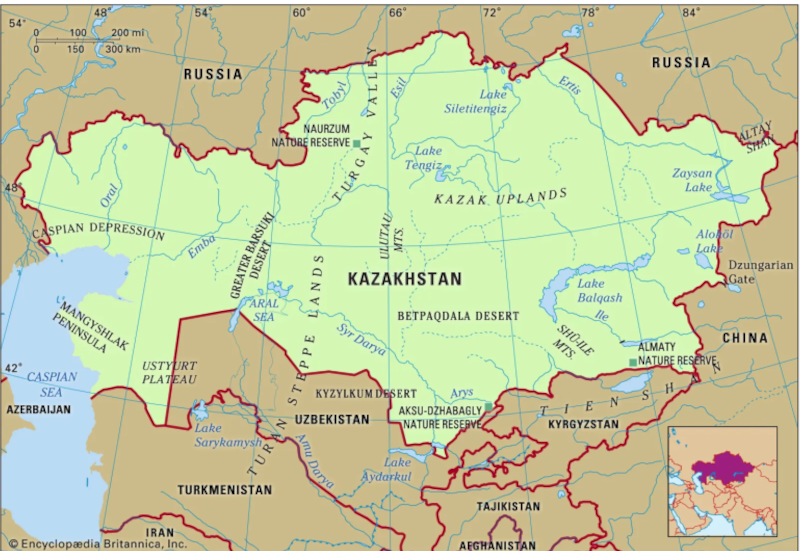
Kazakhstan has one of the largest areas of arable land in the world, with vast steppe regions that support large-scale, mechanized farming. The sector is a mix of large commercial enterprises—many of them legacy operations from the Soviet period—and smaller family farms and peasant holdings.
Average farm sizes are significantly larger than in most European countries, especially in the northern grain belt, where operations spanning several thousand hectares are common. State and private investment over the past decade has focused on modernizing infrastructure, improving irrigation systems, and boosting export-oriented production.
Hemp could serve as both a rotational crop and a source of raw material for domestic processing and export. Its low input requirements and adaptability to different climates suit the northern and central regions, while large contiguous plots allow for efficient mechanized cultivation. If linked to processing plants for fiber, hurd, or seed oil, hemp could slot into existing grain and oilseed value chains, providing both diversification and added value.
Steps remain
For Kazakhstan to convert legal frameworks and varietal approvals into a functioning industry, several critical steps remain. Clear rules on state purchasing and export routes have not yet been established, but will be key to turning the approved varieties into real business.
Government procurement could provide the backbone of the market. If ministries commit to buying hemp-based paper, packaging, panels and insulation, producers and processors could have predictable demand to support investment. Without government tenders, early-stage investors may hesitate.
Export frameworks are equally important. Kazakhstan’s location gives it immediate access to large neighboring markets, but producers will need standardized procedures, certification systems and logistics plans to move products efficiently across borders. These rules do not yet exist.
Going legal
Hemp’s legal rollout in Kazakhstan is occurring against the backdrop of a long history of illicit cannabis cultivation in regions such as the Chüy Valley and Kyzylorda, where law enforcement has seized more than 230 tons of drugs since 2014. The government’s strategy aims to redirect that land and infrastructure into legal, controlled industrial production rather than leaving it idle or illicit.
Kazakhstan now has the varietal base, early investment signals and strategic location to build a competitive hemp sector. Whether it succeeds will depend on how quickly it can close the policy and commercial gaps between approval on paper and production on the ground.