
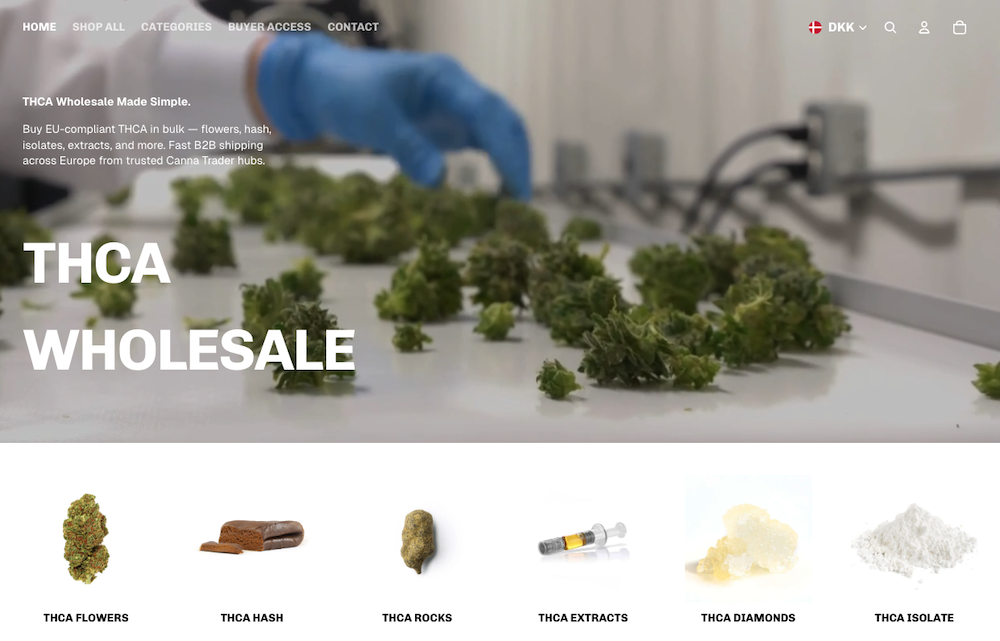
Europe’s key hemp stakeholder group says existing EU rules for cannabinoids give national authorities the legal basis to tamp down a growing trade in intoxicating substances derived from hemp.
A number of unscrupulous online vendors continue to push the envelope on products containing the synthetic substances, breaking EU law while exploiting uneven enforcement among member states.
“We are confident that competent national and European authorities will closely examine these practices and take appropriate action where necessary to ensure compliance with existing legal frameworks,” said Francesco Mirizzi, Managing Director of the European Industrial Hemp Association.
The illicit products “risk undermining the credibility and long-term stability of the European hemp sector,” he warned.
Established EU rules
Unlike the United States — where federal regulators are still working to sharpen cannabinoid rules — Europe’s baseline legal framework is well established. While national implementation remains uneven and politically contested, as seen in Italy’s ongoing disputes, EU-level and international instruments already define the limits of what is permissible.
The following substances, being widely promoted across Europe, are not: THC-A (often promoted as “legal” flower or concentrates that convert to psychoactive THC when heated), delta-8 THC, delta-9 THC, HHC and its variants, THCP, and related semi-synthetic or highly potent cannabinoids, frequently positioned alongside or blended with conventional CBD offerings.
These compounds, of unclear origin, are being offered in a range of products – from smokable flower and gummy bears, to high-potency “rocks” – to both retail consumers and wholesalers within the European market.
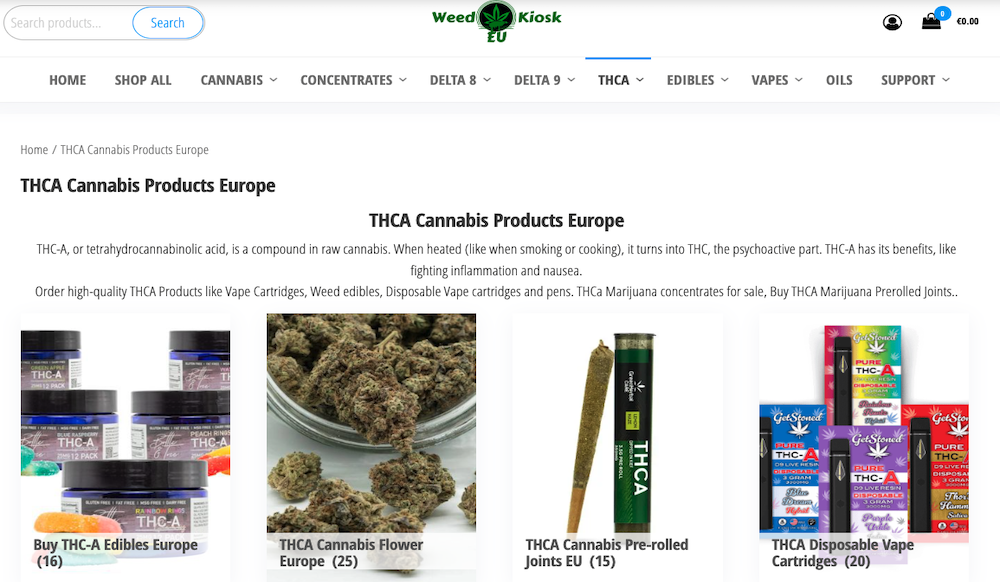
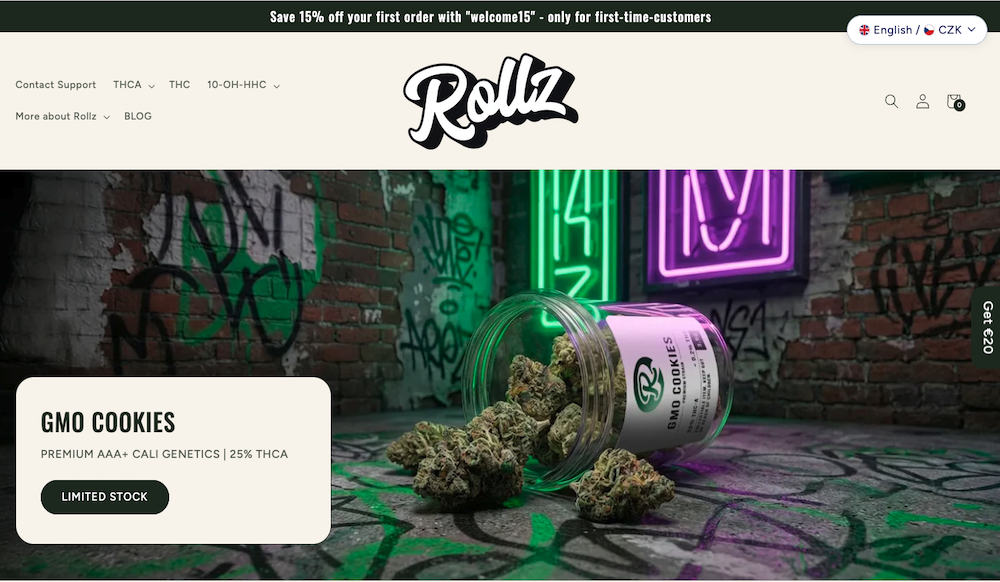
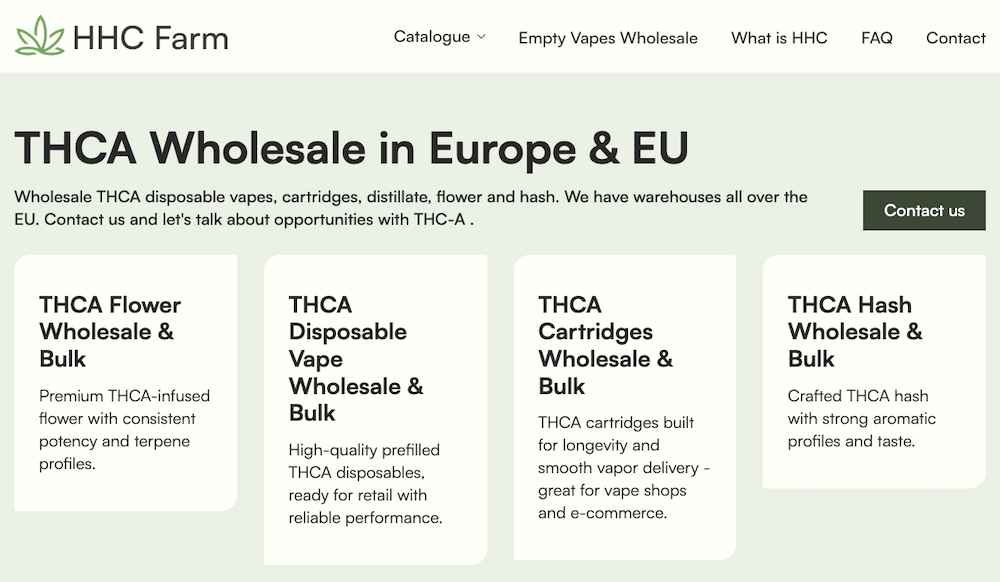
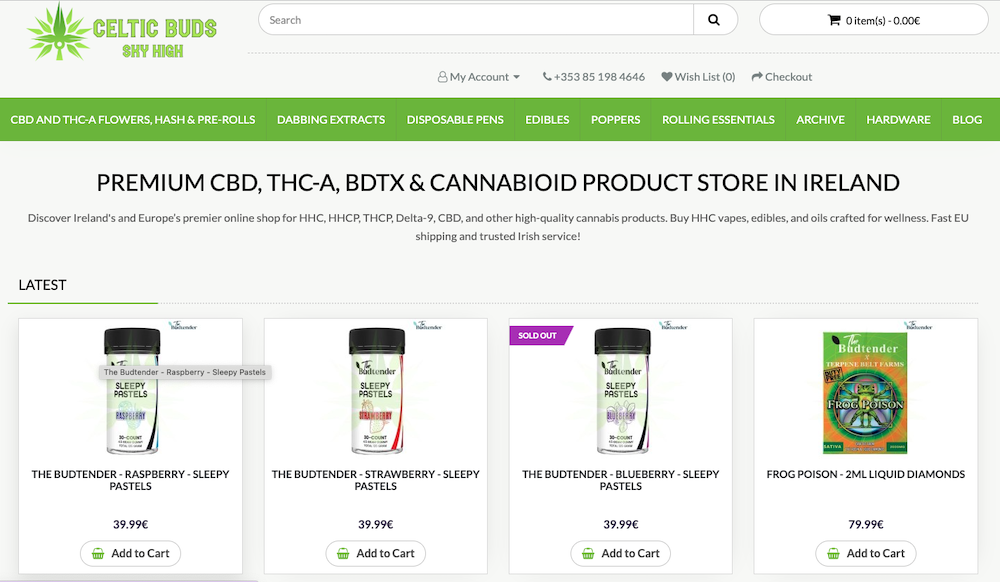
Several online retailers are marketing products containing intoxicating hemp substances across Europe, including THC-A flower, vapes, edibles, and high-potency concentrates.
Alphabet soup
HHC was the first of the “active hemp” compounds to appear in Europe, but that substance was designated Schedule II by the UN Commission on Narcotic Drugs in 2025 – putting it in the same classification as THC and LSD, among others.
More recently, the distortion is present in the marketing of non-psychoactive THC-A – which converts to psychoactive delta-9 THC when heated. Vendors are marketing under the claim that THC-A products are “legal across Europe,” “not regulated by the EU,” or “classified as industrial hemp.”
Those claims do not reflect how European law actually functions.
European regulators already treat intoxicating hemp cannabinoids as posing the same underlying risk as delta-9 THC. The European Food Safety Authority applies the same safety limit to delta-8 and delta-9 THC, at a level so low it leaves no room for selling products containing substances such as delta-8 for intoxication. EU food law also treats THC-A and THC together as “total THC,” acknowledging that THC-A reliably converts into THC when heated.
‘Responsible market behavior’
That clearly undercuts cynical claims by sellers that THC-A occupies some separate legal category in Europe.
“The absence of psychotropic effect in its raw form does not eliminate the clear risk of conversion into a controlled substance,” Mirizzi said. “Presenting THC-A products as broadly ‘legal in Europe’ is highly misleading and potentially dangerous. Such claims ignore the complex legal landscape governing controlled substances, drug precursors, and consumer safety across EU Member States.”
If left unchecked, Europe’s “active hemp” trend risks changing how authorities view the entire cannabinoid market — from a wellness sector needing sensible oversight to a drug-risk sector needing strict control. That shift would not only hit bad actors, but also compliant CBD businesses and the wider non-intoxicating hemp industry.
“Appropriate controls and responsible market behavior are essential to protect consumers, legitimate operators, and the reputation of the hemp industry as a whole,” Mirizzi said.