
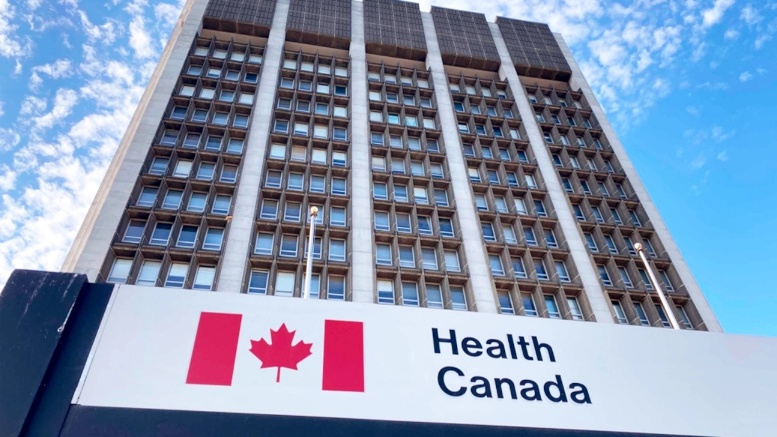
Canada’s leading trade group has urged health officials to raise the country’s THC limit for industrial hemp to 1.0%, eliminate most licensing requirements and open broader markets for hemp flowers – recommendations that would amount to the most significant overhaul of the country’s hemp regulations in nearly three decades.
The proposals, submitted by the Canadian Hemp Trade Alliance (CHTA), are part of a federal consultation launched by Health Canada in May to identify changes to hemp rules that could reduce regulatory burdens while maintaining public safety and compliance with Canada’s international obligations.
Health Canada, which oversees hemp under the country’s Cannabis Act and Industrial Hemp Regulations, is seeking input on potential amendments that “protect human health and safety, animal health and safety, and the environment; decrease compliance costs; and reduce barriers to market entry and expansion.”
If adopted, the CHTA recommendations would move Canada toward one of the most permissive hemp regulatory frameworks in the world. The changes would affect growers, processors, seed developers, exporters and companies seeking to develop higher-value products from hemp flowers and biomass.
The CHTA said current regulations continue to treat hemp as a controlled substance despite its status as an agricultural crop, imposing licensing, reporting and permit requirements that are not applied to other field crops.
‘Thankful’
“The Canadian hemp industry is thankful that Health Canada has recognized that the current regulatory regime for hemp in Canada is costly and is not aligned with hemp’s human and animal risk profile,” said Ted Haney, CHTA President and CEO.
“We are also gratified that Health Canada recognizes the hemp industry’s need to be regulated just as any other field crop sector – effectively breaking the link to all drug regulation,” Haney said. “The potential for the deregulation of Canada’s hemp sector is good news for Canada. While the regulatory changes will only apply to Canada, such a major shift will encourage regulators in all other jurisdictions to deregulate hemp as well.”
Economics of 1.0% THC
Among its most significant recommendations, CHTA called for raising the maximum allowable THC concentration in hemp from 0.3% to 1.0%.
The group argued that the 0.3% threshold, widely adopted around the world, no longer reflects either scientific understanding or commercial realities. The submission cites Canadian hemp researcher Ernest Small, who originally developed the 0.3% benchmark in the 1970s. Small has always said that limit was arbitrary, and has more recently stated his support for a 1.0% threshold.
The alliance also said a higher THC limit would improve breeding opportunities and allow development of cultivars better suited to fiber production and floral biomass markets.
“The industry believes that higher concentration cultivars will primarily be developed for broadacre fibre production (allowing profitable fibre:flower co-harvest) and orchard-style flower production (allowing for economically viable cannabinoid extraction biomass),” CHTA wrote in the document.
“Increasing the regulated maximum total available delta-9-THC concentrations (in) industrial hemp plant flowers and leaves of the inflorescence from 0.3% to 1.0% will maintain global competitiveness for the Canadian industrial hemp industry.”
The recommendation reflects a broader international trend toward higher THC thresholds for industrial hemp, with New Zealand being the most recent country to adopt a 1.0% limit as part of reforms that eliminated grower licensing and significantly reduced regulatory burdens on the industry.
Flower markets
The submission also seeks major changes to Canada’s treatment of hemp flowers, leaves and branches.
Under current rules, hemp growers face strict limitations on who may purchase floral material. CHTA argues that all hemp plant parts should be treated as agricultural commodities unless they are used to produce concentrated cannabinoids.
The group recommends allowing unrestricted sales of hemp flowers and biomass while maintaining licensing requirements under the Cannabis Act for companies that extract concentrated phytocannabinoids.
That distinction is important because it would separate hemp agriculture from cannabinoid extraction, a line the industry has increasingly sought to draw as fiber, grain and industrial applications expand, and as intoxicating substances made from hemp-derived CBD have caused market confusion across all hemp subsectors.
Industry oversight
The CHTA submission repeatedly argues that Health Canada’s current approach remains rooted in provisions designed for narcotics controls that are not required under the 1961 Single Convention on Narcotic Drugs, rather than agricultural production. It recommends transferring many industry oversight functions to Agriculture and Agri-Food Canada, the Canadian Food Inspection Agency and Statistics Canada.
The alliance points to recent guidance from the International Narcotics Control Board and a 2024 United Nations Trade and Development review that encouraged governments to reconsider regulations that treat industrial hemp as a narcotics-control issue.
That interpretation remains controversial in some jurisdictions. Regulators in many countries continue to maintain licensing systems for hemp cultivation even while promoting industrial uses of the crop.
The group also wants responsibility for Canada’s List of Approved Cultivars transferred from Health Canada to the Canadian Seed Growers’ Association, arguing the current approval system is slow, unpredictable and a barrier to breeding innovation.
What happens next
CHTA has issued guidance for interested parties to make submissions to Health Canada’s consultation. The deadline is June 30.
The agency specifically requested stakeholder feedback on licensing, THC testing, reporting requirements, flower sales, import and export controls, and management of the List of Approved Cultivars.
Any changes are likely at least 12 to 24 months away, as Health Canada must review consultation submissions and publish draft regulations for further public comment before adopting new rules.
The consultation follows regulatory changes adopted in 2025 that eliminated THC testing requirements for many hempseed products and removed several restrictions affecting hemp food ingredients.