
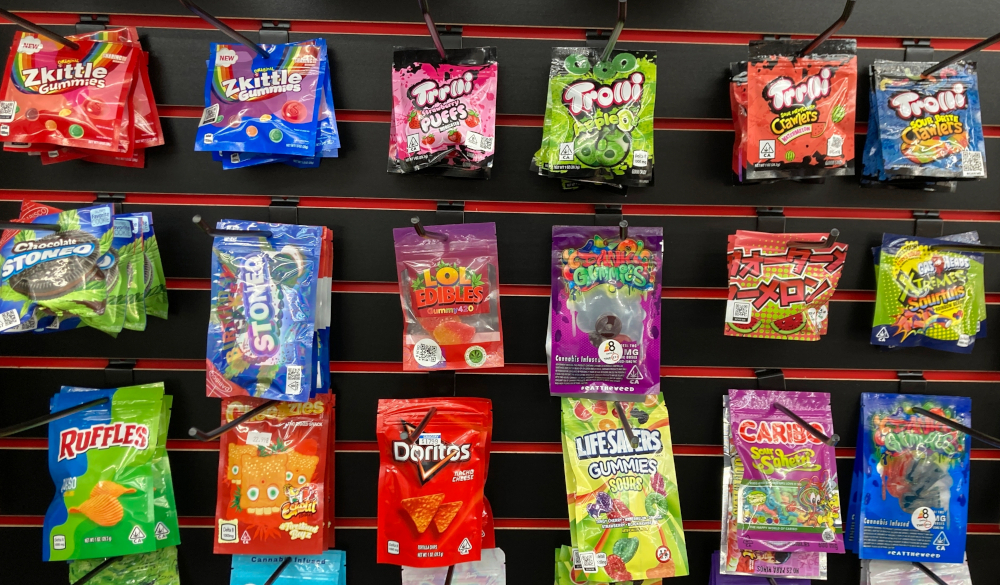
Florida regulators will take public comment today on a proposed rule aimed at keeping intoxicating hemp products out of the hands of children — an action long overdue. For years, the intoxicating hemp sector has relied on stall tactics and smokescreens to avoid clear limits on packaging that targets minors, even as evidence has mounted of unsafe, unregulated products flooding the market.
The Florida Department of Agriculture and Consumer Services (FDACS) is holding a workshop to advance a 2023 law designed to create at least a baseline of consumer protection while the larger fight over intoxicating hemp plays out.
In one scenario, such compounds — such as delta-8 THC, the most popular of the substances— would be treated like recreational marijuana, which is not legal in Florida (despite strong public support for legalization). For now, the state’s cannabis market remains split between a tightly regulated medical marijuana program and a loosely controlled trade in hemp-derived intoxicants.
Nothing vague there
Among rules in the 2023 law is one that prohibits hemp products from being “attractive to children,” defined as:
- “manufactured in the shape of humans, cartoons, or animals; manufactured in a form that bears any reasonable resemblance to an existing candy product…; or containing any color additives.”
- “any drawing… with comically exaggerated features,”
- “the attribution of human characteristics” to animals or plants,
- “the attribution of unnatural… abilities” such as “imperviousness to pain or injury, X-ray vision, tunnelling at very high speeds, or transformation.”
These are not vague concepts. As Agriculture Commissioner Wilton Simpson said of the producers: “They don’t need butterflies, clowns, frogs, and flowers to sell their drugs. Leave Florida’s children alone.”
Still, industry attorneys claim the rule is “subjective,” “ambiguous” and could hurt “freedom of speech.” Others complain that similar design elements appear in alcohol or dietary supplements. Those arguments may sound reasonable in a courtroom, but they collapse under basic common sense. If the point of a label is to appeal to children, the product is being marketed to minors. Period.
Legislative stalemate
The workshop comes against a backdrop of legislative inaction. During the 2025 session, Florida lawmakers failed to pass broader measures to rein in intoxicating hemp products despite growing concern over unregulated compounds like delta-8 THC, the most popular of the substances. Competing House and Senate bills collapsed in the final days of the 60-day session, leaving the state’s booming hemp intoxicants market largely untouched.
The Senate’s bill, SB 438, included a ban on synthetic hemp compounds, restrictions on outside advertising, and tighter caps on THC content. The House proposals, HB 7027 and HB 7029, focused on child safety and consumer protections but took a softer stance on those provisions
Some changes happened without legislative approval. New FDACS rules now require child-resistant packaging for consumable hemp products, mandate QR-code labeling that links to lab results, and restrict marketing strategies aimed at youth. Those measures add to the push for clearer lines between adult-use cannabis products and child-safe consumer goods.
The sleaze factor
The fight over child-focused packaging is inseparable from the wider context of Florida’s cannabis politics, marked by hypocrisy and apparent backroom deals. Some hemp producers resisting child-protection rules have been significant donors to Gov. Ron DeSantis and the Republican Party of Florida, even when their products tested over the legal THC limit or contained banned pesticides.
A Miami Herald/Times investigation found that more than $500,000 in political contributions flowed from hemp companies whose products failed state tests — including vape pens with 5.92% THC, flower at 10.3%, and THCA flower at 16%. Other products from donor companies contained pesticides long banned for human inhalation, including chlordane, linked to cancer, and myclobutanil, which releases toxic gas when heated. One pre-roll made in Florida contained nearly 62 times the legal limit of chlormequat chloride, a pesticide that can cause severe respiratory distress or death.
Protecting kids, or profits?
Since June 2023, FDACS inspectors have removed more than 1.1 million packages of illegal hemp products from store shelves, including over 107,000 packages aimed directly at children under “Operation Kandy Krush.” In 2022, nearly 1,000 calls to Florida’s Poison Information Centers involved children exposed to high-potency hemp-derived THC products.
Despite these figures, DeSantis vetoed a bill last year that would have sharply curtailed intoxicating hemp sales. Hemp executives reportedly discussed raising $5 million to help him fight Amendment 3, a 2024 ballot measure to legalize recreational marijuana, which ultimately failed. That alliance — between sellers of unregulated hemp intoxicants and a governor opposed to adult-use marijuana — has preserved a parallel, loosely regulated intoxicating hemp market in Florida.
Florida’s inaction may not last. The U.S. Food and Drug Administration is reviewing hemp-derived cannabinoids, and the Drug Enforcement Administration may reclassify synthetic THC variants such as delta-8 as Schedule I drugs. Potential revisions to the 2018 Farm Bill, now in debate in Congress, could also close the loopholes allowing synthetic intoxicants under the hemp definition.
Cartoons & cynicism
The state can continue wrangling over the definition of a cartoon, but the more urgent question is whether Florida will stop these companies by banning their products altogether or regulating them like recreational marijuana — with age verification, licensing, product testing, and strict packaging controls.
This is not about artistic freedom or the “ambiguity” of comically exaggerated frogs. It is about whether Florida will put children’s safety ahead of an intoxicating hemp sector that has already shown it will cut corners, bend rules, and buy political cover to keep its products on the shelves. Until that happens, the state’s cannabis market will remain a case study in political cynicism — and public health will remain at risk.