
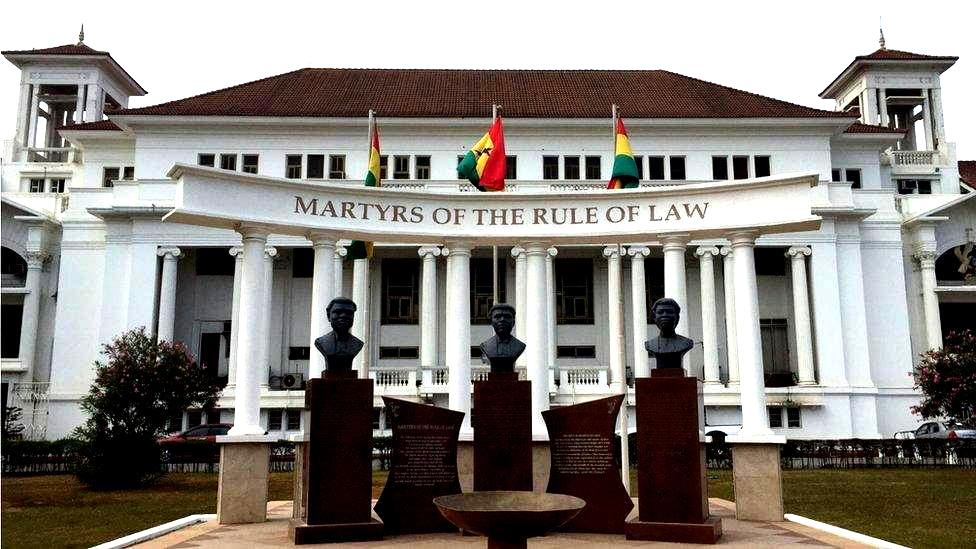
A Ghana farmer has taken the government to the Supreme Court over industrial hemp licensing rules recently released, arguing that the costs and entry requirements are unconstitutional and effectively block small stakeholders from participating.
Mariam Alhassan, a farmer from Techiman in the Bono East Region, filed suit on Friday, asking the Supreme Court to strike down Ghana’s industrial hemp licensing framework. The defendants include the Ministry of the Interior, the Narcotics Control Commission, the Ministry of Food and Agriculture, and the Attorney General.
The challenge lands as Ghana tries to move from years of policy debate to actual licensing for “industrial cannabis,” the national legal category that includes low-THC hemp.
After Parliament approved the final regulatory framework in February, the Narcotics Control Commission (NACOC) said it would begin accepting license applications, signaling a shift from legislation to active rollout. Regulators have also been coordinating with agencies including the Ghana Standards Authority (GSA) to put testing, quality control and seed certification systems in place before full implementation.
Draft shock
According to The High Street Journal, stakeholders said they expected the Ministry of the Interior to publish the official fee schedule at a recent stakeholder briefing but say the figures were not disclosed.
If those fees hold, licenses would start around $9,000 for farms up to 0.4 hectares and rise to $45,000 per hectare for larger operations, plus annual regulatory charges pegged at 20% of the base license and separate licenses for processing, export, transport and research.
Stakeholders warned at the time that the proposed structure was more likely to deter investment than encourage it, especially if the intent of hemp policy was broad domestic participation.
Pay in . . . dollars?
The rules also create a financing problem for local operators by stating fees in U.S. dollars while requiring payment in Ghanaian cedis at the prevailing exchange rate. For farmers and small processors, if the cedi weakens, their costs go up. That makes it harder to plan financing.
Hemp in Ghana has spent years in fits and starts. A 2020 law legalizing medical cannabis and industrial hemp was overturned by the courts on procedural grounds. Finally, in 2024 Parliament passed amendments that set the legal THC limit for hemp at 0.3% and clarified licensing authority under the Ministry of the Interior.
Court challenge
Alhassan’s lawsuit challenges both the cost structure and the wide authority given to regulators under the system. She argues that the framework is unconstitutional because it is exclusionary and not scaled to farm size or risk, and because it imposes “materially higher, unscaled, and cumulative fees” that prevent smallholder participation.
She also challenges requirements that treat low-THC hemp under narcotics-style controls, including transport permits and armed security escorts, and asks the court for interim relief that would restrain enforcement until the framework is redesigned.
NACOC has stated that all licensing will be administered directly by the Commission and has cautioned applicants against dealing with intermediaries who claim they can speed up or secure approvals.