
A Kyrgyz lawmaker has raised the prospect of industrial hemp cultivation during a parliamentary debate on agricultural legislation, highlighting potential uses for the crop in textiles and other manufacturing.
Dastan Bekeshev, a member of Kyrgyzstan’s national parliament, suggested large-scale cultivation of hemp could serve as a raw material for products such as bags and clothing during a discussion of amendments to agricultural legislation. He said producing hemp-based fabrics locally could reduce reliance on imports from countries such as Turkey and China.
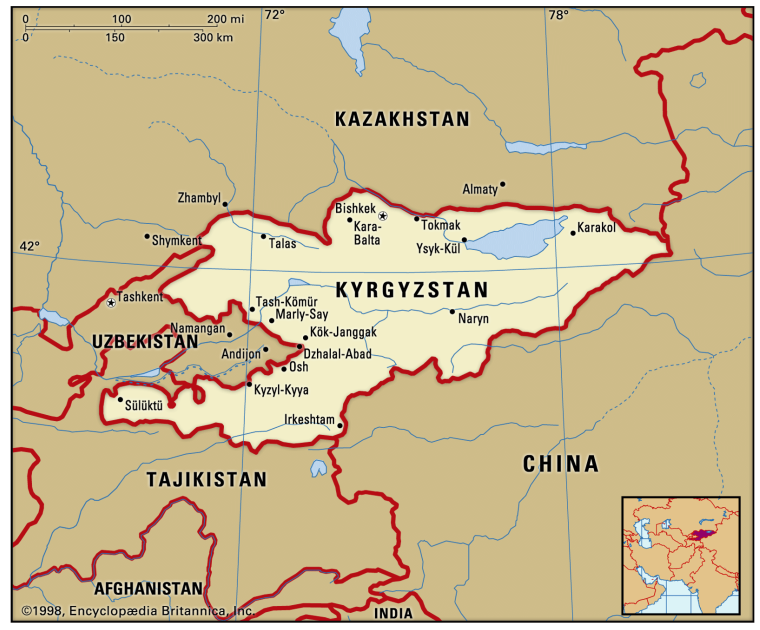
Establishment of a hemp program in Kyrgyzstan would extend a cross-border region where cannabis grows in the wild – across Kazakhstan to the north and Uzbekistan to the west. Both of those countries already have established hemp programs.
Kyrgyz government officials said no formal proposal is currently under consideration. Still, Bekeshev’s comments are the clearest indication yet that the Central Asian country could revisit long-standing restrictions that have effectively blocked development of a hemp sector.
Hemp restrictions
Kyrgyzstan regulates cannabis under its 1998 narcotics law, which treats all cannabis as a controlled substance. The law does not distinguish between marijuana, industrial hemp or CBD, and unauthorized cultivation can bring fines or imprisonment.
Bekeshev’s remarks came during a review of legislation that could allow cultivation of medicinal plants on agricultural land. The draft law would give individuals and companies the right to grow medicinal crops currently prohibited under Kyrgyz legislation. That law does not include hemp or marijuana, but hemp could potentially fall under a similar framework for agricultural crops, Bekeshev suggested.
Cannabis roots
Kyrgyzstan lies within the historical geographic range of cannabis plants, and wild cannabis populations grow in parts of the country, particularly in the Chui Valley. Estimates suggest there are roughly 40,000 hectares of wild cannabis fields across the country.
During the Soviet period, hemp and other crops considered to be “narcotics” were cultivated under state control, but after the USSR dissolved, hemp production collapsed and never recovered.
All of Kyrgyzstan’s neighboring countries are already developing hemp sectors. Kazakhstan legalized industrial hemp and has begun issuing licenses for cultivation and processing projects. Uzbekistan also allows hemp farming under government control for industrial uses such as textiles and manufacturing. China also has a well-developed industrial hemp sector.
Agricultural context
Kyrgyzstan has a relatively small but diverse agricultural sector that plays an important role in rural employment and exports. Farming is dominated by small family operations and private holdings, typically ranging from a few hectares to several dozen hectares. The country has about 10 million hectares of agricultural land, although only around 1.2 million hectares are considered arable.