
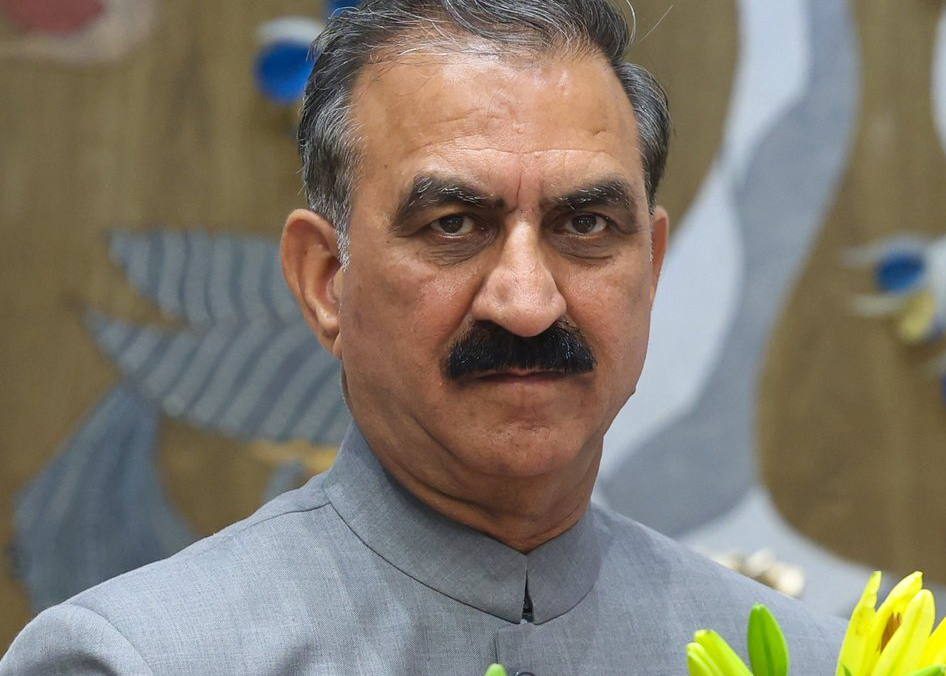
The government of the Indian state of Himachal Pradesh is moving to dismantle a long-entrenched illicit cannabis economy and replace it with a tightly regulated industrial and medicinal hemp sector, framing the shift as both an economic development strategy and a way to curb illegal drug activity.
Chief Minister Sukhvinder Singh Sukhu said the policy is intended to convert cannabis—long treated as a social and legal problem—into a formal agricultural and industrial sector that benefits farmers, the state treasury, and downstream manufacturers rather than criminal networks.
Recently unveiling the state’s hemp plan, Sukhu said cannabis found in valleys such as Kullu, Mandi and Chamba will be replaced with state-licensed cultivation of industrial varieties, under a THC limit of 0.3%.
“This scientific threshold ensures the crop is non-intoxicating and unsuitable for misuse, while retaining its superior fibre and seed quality,” Sukhu said.
Feral cannabis
Cannabis has grown wild for decades in Himachal Pradesh, spreading naturally rather than through organized cultivation. Such feral cannabis has long been harvested illegally—most notably for the production of charas, a hand-rubbed hashish made from cannabis resin—creating an informal economy rooted in wild growth rather than planted marijuana fields.
Because THC levels vary widely and plants are unmanaged, the native cannabis cannot be classified as industrial hemp under modern rules. Officials say the policy intends to bring hemp production into a regulated agricultural system and formal supply chains.
Medical hemp restrictions
The state Cabinet last year cleared a pilot project for controlled cultivation following a September 2024 amendment to the state’s Narcotic Drugs and Psychotropic Substances rules, which legalized cannabis cultivation strictly for industrial, scientific and medicinal purposes.
Only hemp intended for industrial outputs will be permitted for broad cultivation. Medical hemp production, by contrast, will be limited to tightly monitored facilities operating under 24-hour CCTV surveillance and geo-tagging. Standard operating procedures covering cultivation, transport and manufacturing are also being developed.
The framework allows farmers to grow industrial hemp independently or through contract farming arrangements. Officials say the crop could offer an alternative to traditional agriculture, increasingly abandoned due to wildlife damage, particularly by monkeys.
Optimistic projections
Sukhu said the shift is also designed to attract private investment in value-added processing and manufacturing.
“This policy is not about promoting addiction but about building a modern, eco-friendly industry,” he said. “We want the state’s natural wealth to benefit farmers and the public exchequer rather than illicit networks.”
Once scaled, regulated hemp cultivation is projected to contribute $120–$240 million annually to the state exchequer.
Diverse agriculture
Himachal Pradesh’s varied topography—ranging from subtropical foothills to alpine zones—supports a wide range of crops, including grains, vegetables, ginger, garlic and saffron. The state is also known for medicinal and aromatic plants such as hops, wild marigold and indigenous herbs.
Agriculture supports more than 60% of the population, but farms are small, averaging less than one hectare. Officials argue hemp’s resilience, low water needs and tolerance for marginal soils make it a strong candidate for hill agriculture.
State universities—Chaudhary Sarwan Kumar Himachal Pradesh Krishi Vishvavidyalaya in Palampur and Dr. YS Parmar University of Horticulture and Forestry in Nauni—are leading pilot studies to develop high-yield, low-THC seed varieties suited to Himalayan conditions.
Challenges ahead
Despite strong investor interest in sectors such as textiles, bio-composites, pharmaceuticals and eco-friendly construction, officials acknowledge obstacles. India faces shortages of quality certified hemp seed and limited processing infrastructure, and market awareness of hemp-based products is uneven.
Revenue Minister Jagat Singh Negi, who chaired the legislative committee behind the reform, said the panel studied regulated cannabis models in the Indian states of Uttarakhand, Madhya Pradesh, Jammu and Kashmir before finalizing its recommendations.
Uttarakhand, India’s first state to legalize industrial hemp, has struggled to build strong markets and workable regulations. Himachal Pradesh says it plans to avoid those problems by tightening oversight and better linking research, farmers and processors.
Manufacturing vision
Sukhu said the Himachal Pradesh government envisions a future industrial “hub” positioning the state as a manufacturing center for hemp-based textiles, packaging, cosmetics, biofuels, Ayurvedic medicines and hempcrete.
The broader goal, he said, is to make the state self-reliant by 2027 and among India’s most prosperous by 2032—by replacing an illicit economy with a regulated one rooted in agriculture, science and industrial value chains.