
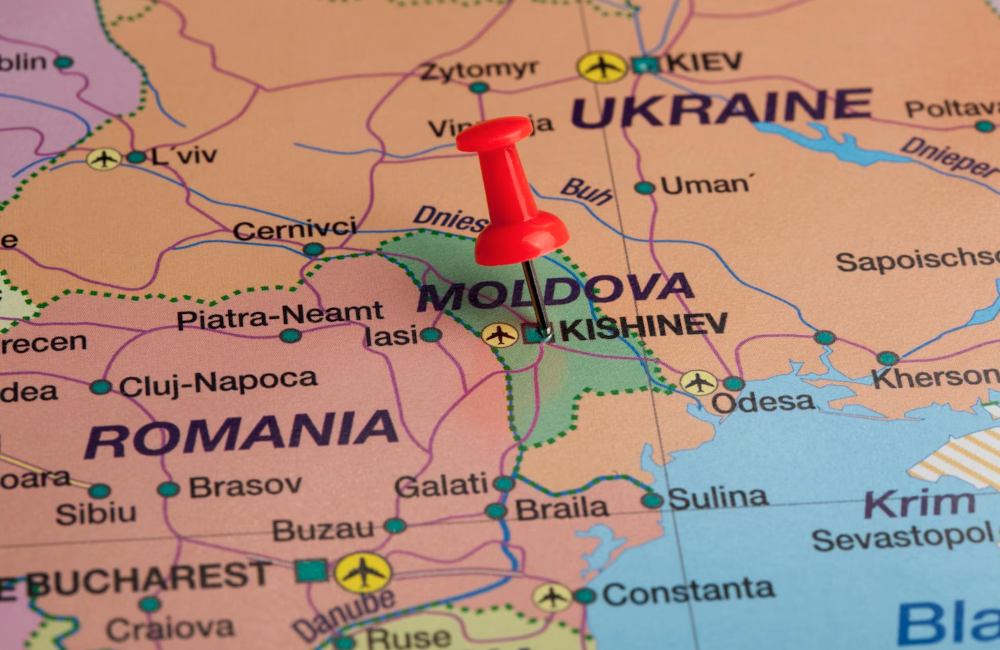
Moldova has approved a long-awaited regulation governing the authorization, cultivation, monitoring and processing of industrial hemp for the production of seeds and fiber.
Flowers remain subject to Moldova’s narcotics controls, meaning CBD and other cannabinoids cannot be commercialized and are effectively excluded from the legal value chain.
The rules formalize a sector that had already begun operating under limited, case-by-case approvals.
Rules defined
The new regulation establishes licensing through the National Agency for Food Safety (ANSA), sets requirements for THC testing in the field, and mandates record-keeping tied to land use, varieties and processing methods – creating a unified system where oversight had previously been fragmented.
Initial efforts to revive hemp in Moldova date as far back as 2016, and the first cultivation permits were issued in 2025 – but without a fully developed system for licensing, testing or downstream processing. The narrow permissions left growers with unclear rules around compliance and end uses.
Scope expands
Moldovan authorities see hemp as a catalyst for innovation and a means to modernize the country’s agricultural economy.
The framework “provides the private sector more resources for investment and development,” the government said in a statement, while it broadens commercial pathways for hemp beyond traditional outputs.
“Industrial hemp will be able to be used for briquettes, industrial oils, food supplements, cosmetic products and other products permitted by law,” the government said.
While the regulation does not explicitly spell out destruction requirements for flowers, their continued treatment under drug law effectively means they must be removed from the production stream.
Reviving hemp
Stakeholders, meanwhile, must try to reconstruct legacy fiber and seed value chains.
From the late 19th century through the interwar period, most of present-day Moldova was part of Romania, a major European hemp producer within a regional bast-fiber economy centered on rope, textiles and cordage. That link was broken in 1940, when the Soviet Union annexed Bessarabia under the 1939 Molotov–Ribbentrop Pact.
Only in this decade did hemp reappear through tightly controlled experimental cultivation.
Farming in Moldova
Agriculture remains important to Moldova’s economy, with about 75% of land in agricultural use and roughly 1.8 million hectares of arable farmland. The sector contributes around 7%–12% of GDP and employs more than a quarter of the workforce, rising further when food processing is included.
Most Moldovan farm production is export-oriented, led by maize, wheat, sunflower, grapes and fruit, reflecting a traditional farming base gradually shifting toward higher-value processing.
The government claims putting in hemp crops “can increase by up to 40 per cent the value obtained per hectare.”