
Australia’s industrial hemp sector has been given a rare opportunity to define its future, with the Senate opening a national inquiry that will examine the crop’s role in agriculture, construction, and the wider economy.
Industry stakeholders believe hemp could help alleviate the country’s housing crisis by providing low-carbon building materials, while also bolstering a nascent hemp grain sector and positioning Australia as a global leader in sustainable farming.
The Senate’s Rural and Regional Affairs and Transport References Committee will now accept input from stakeholders and the public until October 24. The Australian Hemp Council (AHC), the industry’s peak body, has posted a form for submissions. A final report should be ready by mid-2026.
‘Long, steady path’
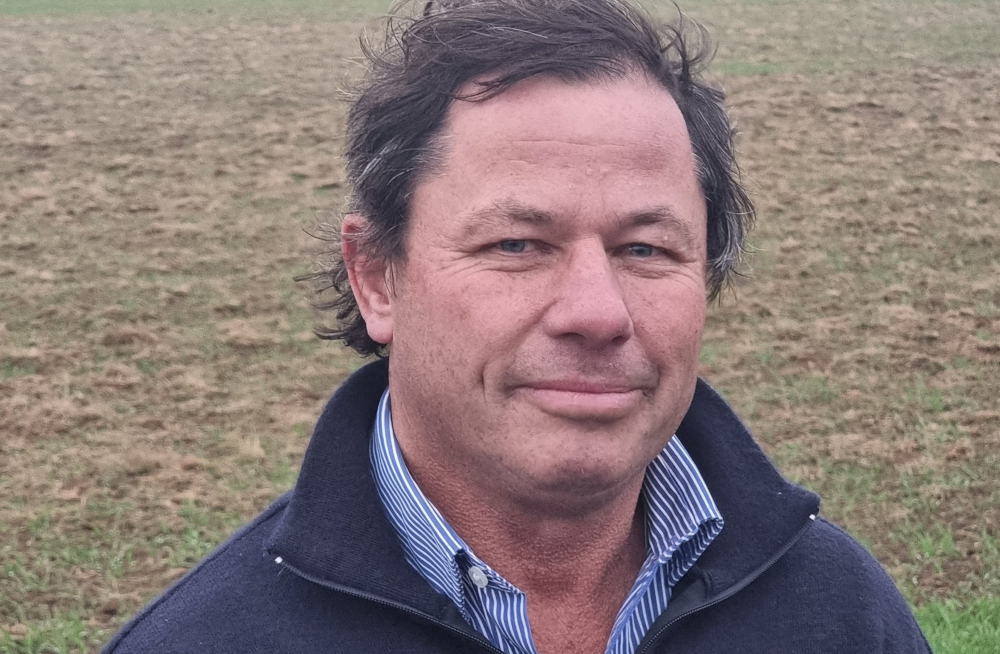
The inquiry comes after years of pushing for such a study by hemp stakeholders, led by Tasmanian farmer Tim Schmidt.
“It has been a long and steady path to bring this to fruition,” said Schmidt, who founded the AHC in 2020.
“This is a golden opportunity to bring the real and amazing features of the hemp industry to light and show clearly the need for government recognition and support so we can reap the huge benefits for our community, environment and economy,” he said.
1.2 million homes needed
The inquiry also comes against the backdrop of Prime Minister Anthony Albanese’s pledge to deliver 1.2 million new homes over five years, a goal that has become the centerpiece of the government’s housing strategy. Unveiled in August 2023 through a National Cabinet agreement, the plan earmarks federal funds for infrastructure and incentives to accelerate building.
For hemp advocates, the opportunity is clear. Hempcrete and other bio-based products can provide insulation, panels, and prefabricated elements suited to rapid, sustainable, modular construction, which could help both the government’s housing ambitions and its emissions goals.
Resurgence afoot
That vision is supported by signs of resurgence in the fields. Total Australian hemp plantings more than doubled in the 2023–24 season to 3,266 hectares, reversing a three-year decline. The balance between grain and fiber crops is notable: about 1,700 hectares went into hemp seed, while 1,564 hectares were planted for fiber. Fiber fields nearly doubled year-on-year and appear to be gaining fast, while grain production nearly tripled to recover lost ground.

Get the lowdown on hemp in Australia and New Zealand. A special report coming in November!
Pre-order now | $99
Australia’s hemp economy remains confined to food and fiber outputs. CBD is technically legal but tightly restricted as a prescription-only medicine, leaving the industry without access to the high-value cannabinoid market that fuels hemp revenues elsewhere. This makes fiber and grain development critical to long-term growth.
Investment patterns reflect that reality. Over the last three years, AU$52 (~US$34.4 million) has flowed into fiber hemp, with projections of an additional AU$195 million (~US$129 million) over the next two years.
Scope of inquiry
The terms of reference for the Senate inquiry are sweeping, covering everything from soil health and water use in farming systems to opportunities in manufacturing, bioplastics, textiles, and construction. The committee will also examine regulatory inconsistencies across states and assess what is needed to create stable national markets. The process is expected to draw input from growers, processors, researchers, and allied industries.
“This inquiry represents a bridge between tradition and transformation, offering reassurance to conservative policymakers and confidence to the innovators pioneering hemp’s future,” said current AHC President, Matthew Lariba-Taing. “It’s about consolidating trust while unlocking the industry’s full potential.”
Australia enters this moment with some of the building blocks already in place. State-level organizations have federated under the AHC, giving the sector a collective voice. Researchers and farmers are considered world-class, with proven capacity to scale up quickly if the regulatory environment is clarified. The domestic hemp seed business, while still small, is another area of promise for food and export markets.
Industry leaders argue that the government’s role should be to enable rather than to control. Said Schmidt: “The key outcome we require is a legislated definition of hemp (cannabis with less than 1% THC) and have it removed from the national poisons schedule. This will allow the states to reform their respective hemp legislation to open up significant opportunities for the industry and put Australia at the forefront of global hemp innovation, industry sustainability, and profitability.”
Looking ahead, and back
In Australia, inquiries of this kind do not automatically result in new policy, but they can set the foundation for future regulation and investment. Whether it becomes a turning point for hemp, or simply another report that goes nowhere, will depend on whether policymakers see the crop as more than an afterthought in agriculture.
Looking back, Schmidt reflects on how long and winding the road has been to reach this moment. “From those first conversations with Phil Warner about six years ago, to sitting at my kitchen table with Jacquie Lambie four years ago—she told me about timing, and how to make an inquiry happen—it has been a steady path,” he recalled.
He said momentum gathered slowly, through the “vital and solid support” of Sen. Peter Whish-Wilson, and then the “100 percent commitment” of Greens leadership. One Nation added its backing at the party’s last national conference.
Schmidt reserved special praise for the leadership shown by Sen. Richard Colbeck, which, he said, “ensured the numbers in the Senate for the success of this enormous national initiative.”
Schmidt also gave credit to the Tasmanian government officials who helped him navigate the complexity of federal and state rules. Their work, he said, gave him clarity on the regulatory frameworks that still define—and restrict—the industry.