
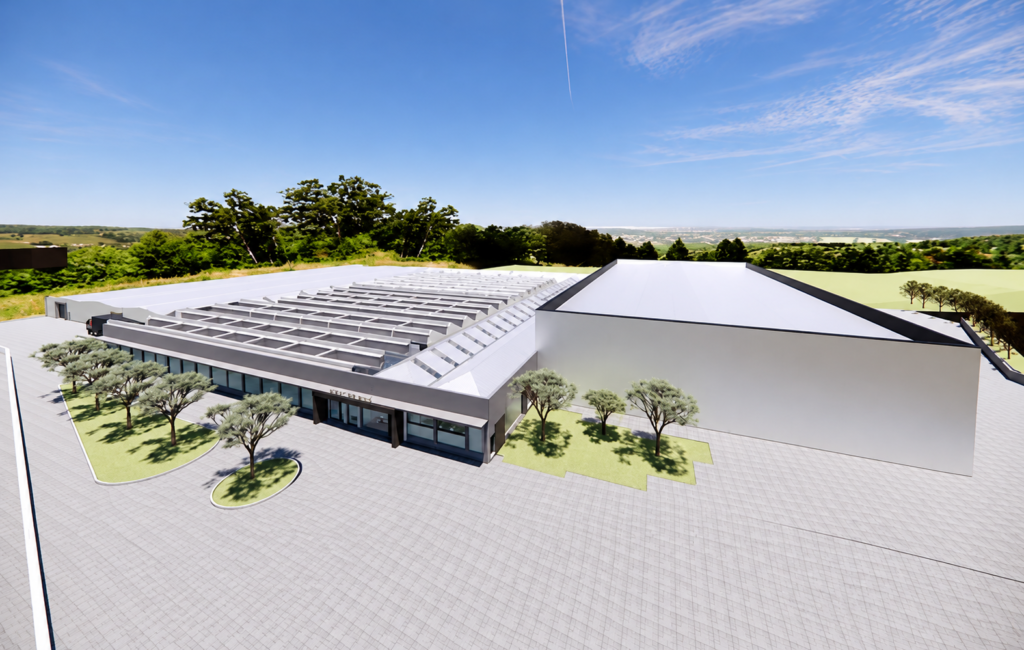
A €30 million ($35 million) Chinese-Portuguese joint venture, Nau Verde, says it is nearing completion of a natural fibers spinning factory in northern Portugal, aiming to reduce dependence on Asian processors.
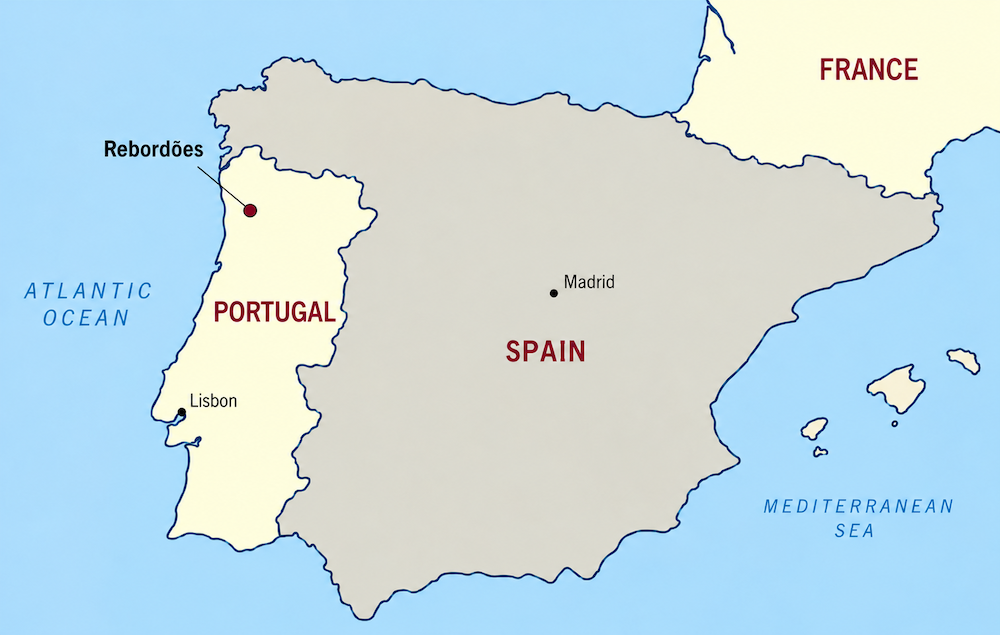
The factory, in Rebordões, in the municipality of Santo Tirso, received more than €13 million in European Union-backed funding. The project, first announced in 2025, could strengthen Europe’s textile supply chain, which ships substantial quantities of flax, and smaller volumes of hemp to Asia for processing before returning as yarns and fabrics for European manufacturers.
‘Important pillar’
The new factory, called Nafilux by Nau Verde (“Green Ship”), is designed to produce premium linen and hemp yarns for clothing and other textile applications. It is being developed in a former industrial building covering approximately 15,000 square meters.
“It will be a very important pillar of the European textile industry,” Isabel Carneiro, CEO of Nau Verde, told Portugal Têxtil. She has said the company’s main target markets will be Western Europe, the USA and Canada – higher-value textile destinations where demand for traceable natural fibers is increasing. The partners have not disclosed planned hemp volumes or the expected production split between hemp and flax.
The Chinese partner, Kingdom Holdings Ltd., has a combined annual capacity of 27,000 metric tons of mainly flax yarn from its Chinese and international production. The company produced only 339 tons of hemp yarn in the first half of 2026.
Back and forth
Europe turns out roughly three-quarters of the world’s long flax fiber, primarily in France, Belgium and the Netherlands, but much of the material is exported to Asia for spinning, adding transportation costs and raising questions about transparency.
In 2024, the European Union exported approximately 109,000 metric tons of unspun flax fiber to China, accounting for roughly 68% of EU exports in two major processed-fiber categories, according to UN trade data. On the flip side, China supplied 65% of EU flax yarn imports and 87.1% of hemp yarn imports by value between January 2022 and March 2026.
Europe’s linen spinning industry is concentrated in a relatively small number of facilities, including mills in Poland, France, Lithuania and Italy. The Alliance for European Flax-Linen & Hemp counted just eight spinning mills under its Masters of LINEN certification at the end of 2025. France has recently restored some domestic spinning capacity, but much of Europe’s flax continues to be shipped to Asia for conversion into yarn.
Neither Portugal nor neighboring Spain is a significant producer of textile flax or industrial hemp. Portugal recorded 480 hectares of hemp in 2025, but that was largely for flower production.
Chinese partner
The project brings together four long-established Portuguese textile companies: Calvelex (1985), a high-end garment manufacturer; Mundifios (1985), a yarn producer and distributor; Paulo de Oliveira (1936), a major wool textile manufacturer; and Riopele (1927), an integrated producer of fashion fabrics and garments.
Kingdom Holdings Ltd. is a Chinese textile manufacturer specializing in linen and hemp yarns. Listed on the Hong Kong Stock Exchange since 2006, the company is an established international supplier of wet-spun natural-fiber yarns. Kingdom is controlled by Chinese textile entrepreneur Ren Weiming, the company’s chairman, who controls roughly 57% of its shares through direct and associated interests. The Hong Kong-listed company has factories in China and Ethiopia and expanding investments overseas.
Kingdom Holdings operates five spinning factories in China and Ethiopia, and is also building a spinning mill in Egypt. The Hong Kong-listed company reported revenues of approximately $375 million in 2025 and returned to profitability after a loss in 2024.
The Portuguese investment reflects a broader reassessment among Chinese natural-fiber manufacturers. Hongliang Ding, founder and president of China’s Hemp Fortex Industries, told HempToday in July that rising labor costs and advances in automated processing were making overseas production increasingly attractive. Ding said his company hopes to establish processing lines in Europe or North America, preferably close to where hemp is grown, reducing the need to ship raw materials to China.
EU investment
Kingdom’s Portuguese factory, expected to create about 250 jobs, is part of the country’s broader Lusitano Project, a €111.5 million industrial initiative aimed at developing production chains for natural and recycled textile fibers, yarns and finished products.
More than €13 million of the factory’s total €30 million investment comes through Portugal’s Recovery and Resilience Plan (PRR), a national program financed by the European Union’s NextGenerationEU post-pandemic recovery fund.
The PRR, with approximately €22 billion in grants and loans allocated to Portugal, supports industrial modernization, innovation, environmental sustainability and digital transformation.