
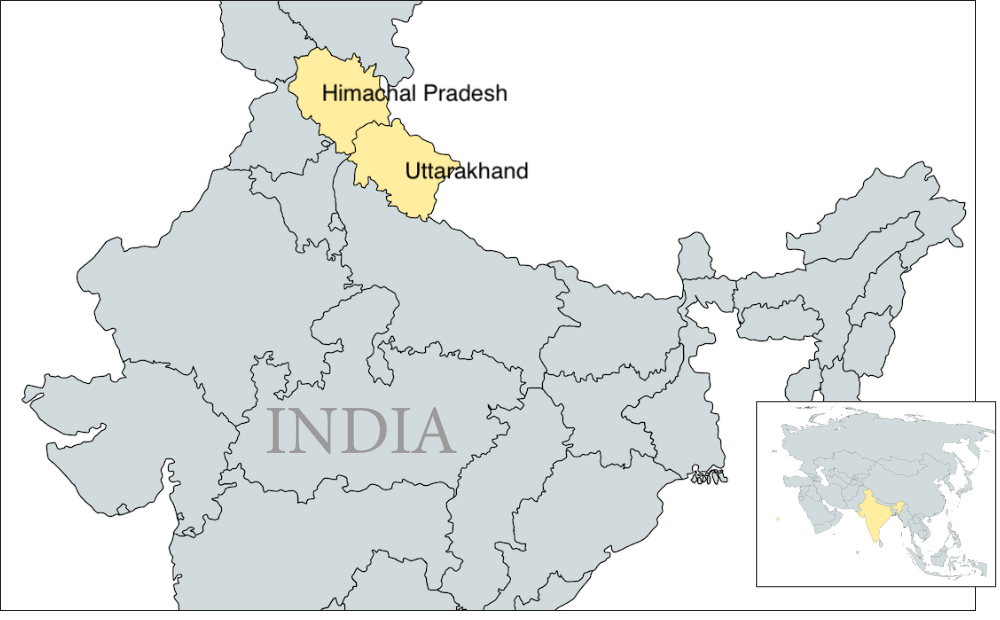
The Indian state of Himachal Pradesh has taken the next step toward building an industrial hemp economy, approving amendments to the state’s Narcotic Drugs and Psychotropic Substances Act that clear the way for regulated commercial cultivation and a broader market framework.
Himachal officials appear to have absorbed lessons from neighboring Uttarakhand – India’s first state to legalize industrial hemp – adopting a strategy that emphasizes certified seed supplies, research institutions, contract farming, processing industries and market linkages.
The initiative could generate between Rs 500 crore and Rs 2,000 crore (roughly US$60 million-$240 million) in annual state revenue while creating rural employment through sustainable agriculture and industrial development, the state government has said.
‘Green to Gold’
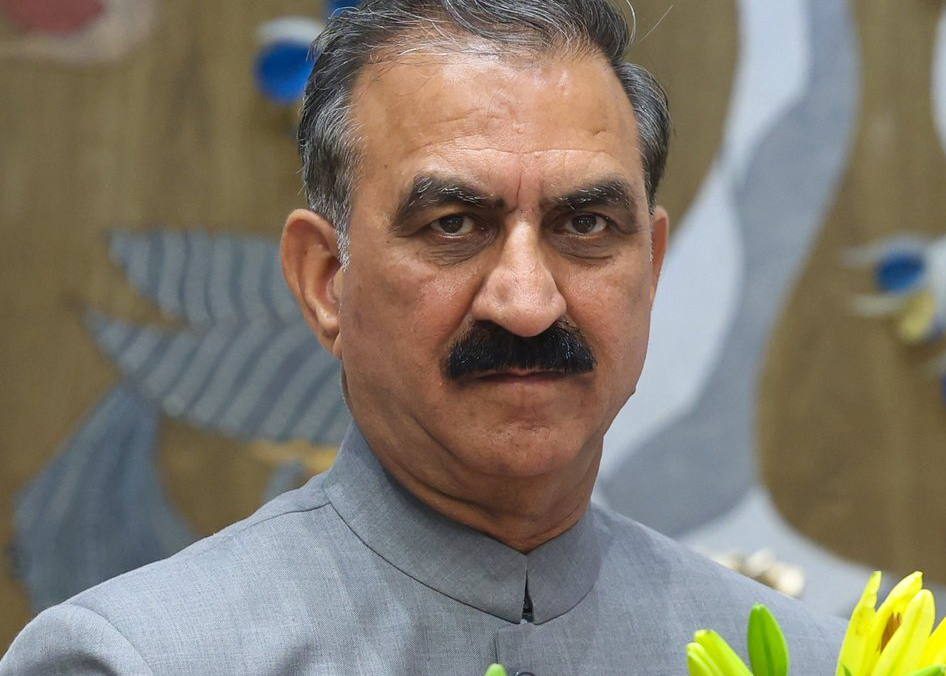
Himachal Pradesh Chief Minister Sukhvinder Singh Sukhu described the initiative as a “Green to Gold” campaign aimed at strengthening the rural economy through agriculture and manufacturing.
The latest cabinet decision follows several years of planning. A committee established in 2023 studied hemp policies in Uttarakhand and Madhya Pradesh before recommending legal amendments and a regulated commercial framework.
Under the new plan, the state will draft standard operating procedures, set up a tribunal to oversee approvals and create a seed bank supplying certified hemp varieties to farmers. The state’s agricultural university in Palampur will provide research and technical support while officials evaluate low-THC hemp varieties containing no more than 0.3% tetrahydrocannabinol (THC). The committee recommended obtaining certified low-THC seed from Uttarakhand’s established hemp research and seed-production program in Selakui, rather than relying on local cannabis populations.
Selakui facilities have been involved in Uttarakhand’s industrial hemp program since the state legalized hemp in 2018. It is one of the few places in India that can legally produce and maintain certified hemp seed.
Value chain
The Himachal government’s approach reflects a broader understanding that hemp development depends on creating complete supply chains rather than simply permitting cultivation – the principal weakness facing India’s emerging hemp sector. While several states have legalized or encouraged industrial hemp production, processing capacity remains limited, certified seed supplies are scarce and stable commercial markets are still developing.
Earlier this year, Himachal officials also outlined plans to use regulated hemp cultivation to replace portions of the state’s long-standing illicit cannabis economy while attracting investment in textiles, construction materials, biocomposites and pharmaceutical applications.
Beyond fiber
Officials are also highlighting opportunities beyond industrial materials.
Ayurvedic expert Jaiveer Singh said hemp products are being studied for their potential role in managing chemotherapy side effects and other medical conditions, pointing to growing interest in hemp-based wellness products that align with India’s traditional Ayurvedic medicine sector.
Although the regulatory amendments represent an important milestone, commercial cultivation is still several administrative steps away.
The state must finalize operating rules, establish its oversight system, certify seed supplies and build processing and marketing infrastructure before farmers can fully participate in a commercial hemp economy.