North Carolina Attorney General Jeff Jackson said state Alcohol Law Enforcement (ALE) is fully prepared to enforce a new bipartisan bill aimed at reining in intoxicating hemp products, a move that would also impose new restrictions on CBD. Speaking at a Senate committee hearing, Jackson said ALE has been coordinating with his office for months to prepare for enforcement “on the ground,” signaling that the state is ready to act swiftly if the proposed legislation becomes law.
The measure, House Bill 328, has gained strong bipartisan support and is being fast-tracked through the North Carolina Senate. It passed unanimously in both the Senate Health and Senate Finance Committees this week and is now headed to the Judiciary Committee before reaching the floor for a vote.
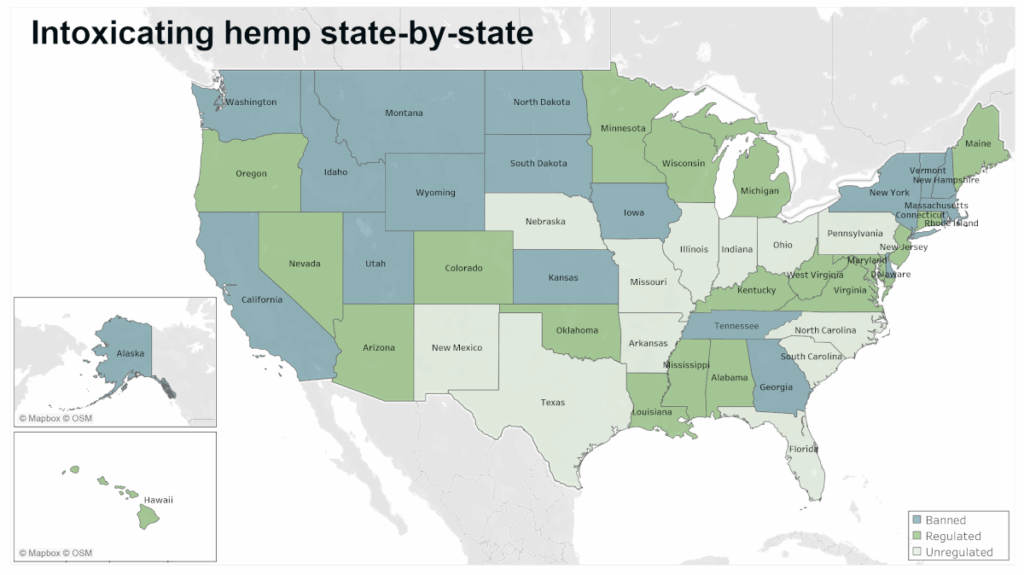
Meanwhile, a bill in Delaware to regulate hemp-derived THC drinks was abruptly withdrawn just a week after being introduced.
CBD under fire
In North Carolina, a proposed update to HB 328 expands the definition of hemp-derived cannabinoids to include delta-9 THC, delta-8, CBD, and a variety of synthetic derivatives. Under the bill, sales would be limited to adults 21 and older, and retailers would be required to obtain a license to legally sell these products.
While CBD is non-intoxicating, the bill’s definition groups it alongside other cannabinoids, meaning all hemp-derived consumables—not just those that get users high—would be subject to licensing and age restrictions.
“This is long overdue,” said Democrat Sen. Julie Mayfield, who praised Republican Sen. Amy Galey for leading the legislation, according to ncnewsline. “I wish we had done this back in 2021 when we figured out the whole hemp problem. The genie is pretty far out of the bottle now, so we’re trying to stuff it back in.”
The bill targets the candy-like packaging and unregulated sales of products containing intoxicating hemp substances that have appeared widely in vape shops and convenience stores. Retailers would be banned from selling these items to minors and from marketing them with cartoonish branding resembling popular snacks like Oreos and Sour Patch Kids.
Broader political shift
The legislative push comes on the heels of a broader political shift in North Carolina cannabis policy. On June 13, Gov. Josh Stein signed an executive order establishing a 24-member State Advisory Council on Cannabis. The council’s aim is to close regulatory loopholes that have allowed a wide range of intoxicating hemp products—often derived from CBD—to be sold with little oversight.
“This is the Wild West,” Stein said in announcing the order. “Anyone, including kids, can legally buy high-THC products labeled as hemp. There’s zero protection in place.”
Stein’s order reflects growing concern over a national loophole created by the 2018 Farm Bill, which legalized hemp and its derivatives containing less than 0.3% delta-9 THC. That language inadvertently enabled the sale of chemically altered intoxicants such as delta-8, delta-10, and HHC. These compounds have flourished in a legal gray area, prompting states like California to impose strict bans.
The North Carolina council will bring together voices from health, law enforcement, agriculture, tribal communities, and the legislature. Co-chaired by Dr. Lawrence Greenblatt, state health director, and Robeson County District Attorney Matt Scott, the group is charged with developing a comprehensive regulatory framework for the state.
Beyond THC
HB 328 would also require local school boards to update policies banning hemp-derived products on school property, alongside electronic cigarettes and vaping devices. Products would need to carry clear potency and labeling disclosures, and any THC-infused consumables would be restricted from sale to minors. Violators could face civil penalties of up to $500 for a first offense and $2,000 for repeat violations within three years, along with license revocation.
The bill includes a provision to add kratom—a psychoactive plant native to Southeast Asia—to North Carolina’s list of controlled substances. Although currently legal, kratom can have stimulant or sedative effects depending on dosage and is unregulated at the state and federal levels.
Jackson acknowledged the complexity of the evolving policy landscape but emphasized the urgency of immediate action. “We support this initial step forward,” he said. “This is about protecting kids, and ALE is ready to go.”
Stein urged lawmakers not to wait for the cannabis advisory council’s final recommendations before acting. “Start by banning intoxicating hemp sales to minors and requiring ID checks and labeling now,” he said. “This could be a model for the rest of the country.”
Delaware bill pulled back
In Delaware, Rep. Ed Osienski had introduced legislation to bring hemp-derived THC beverages under the state’s adult-use cannabis regulatory system. These drinks—often made with synthetic delta-8 or delta-9 THC derived from hemp—have become widely available and marketed separately from regulated marijuana products.
However, the bill was withdrawn just one week after its introduction. No explanation was given, though the move underscores the political sensitivity and market uncertainty surrounding these products. Industry observers said the withdrawal reflects how fraught efforts to regulate hemp intoxicants have become, even in states with established cannabis frameworks.