
The European Union moved another step closer last week to allowing certified permanent carbon removals into its Emissions Trading System (ETS), which would expand the scope of the EU’s flagship carbon market beginning in 2030.
While the proposal still faces legislative approval, it further strengthens the business case for hemp-based carbon storage technologies.
“Once we’re flooded by public demand, this is an entirely different driver than hoping for the generosity of private companies that regularly change their sustainability agendas,” said Nando Knodel of Hamburg-based carbon specialist CarbonConnect GmbH. “It becomes a must-have obligation rather than something that’s simply nice for public relations.”
Defining ‘permanent’
Permanent carbon removal refers to strategies and technologies that remove CO₂ from the atmosphere and ensure its secure, long-term storage for centuries.
Part of a broader overhaul, the EU plan would allow credits for such removals to become eligible for trading in the ETS – where companies buy carbon permits to meet legal emissions limits – beginning in 2030, if approved by the European Parliament and EU member states.
The ETS currently lets companies buy and sell permits to emit greenhouse gases but does not yet cover certified permanent carbon removals. The proposal continues the EU’s gradual move toward recognizing those removals as part of its carbon market, shifting from a research and voluntary-market phase to one that creates regulated commercial value.
Strict requirements
The plan applies only to permanent carbon removals that meet strict certification requirements under the EU’s Carbon Removals and Carbon Farming Certification Framework (CRCF). Those rules are intended to verify that carbon has been removed from the atmosphere and stored durably while avoiding double counting and other accounting risks.
The Commission has not proposed special treatment for hemp or any other biomass feedstock, but several pathways under development in the hemp sector could eventually qualify, including biochar, bioenergy with carbon capture and storage (BioCCS), and construction materials that permanently store plant-based carbon. Which approaches ultimately qualify will depend on future implementing rules and certification methodologies.
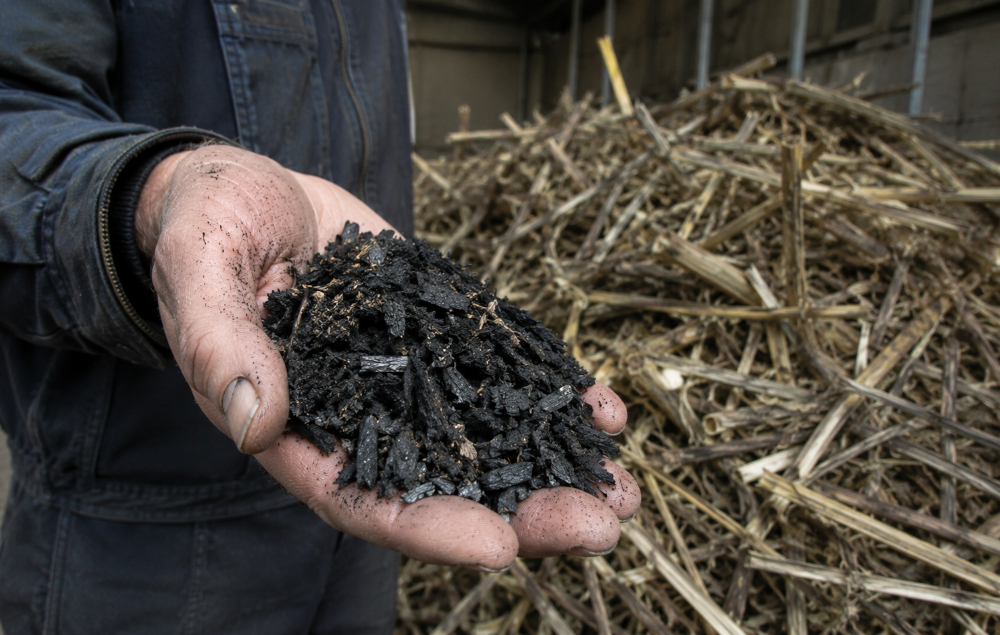
Knodel said biochar and hemp-based building materials represent the strongest near-term opportunities for the industry. He said biochar is already recognized by the European Commission as an important carbon removal pathway, delivers additional agricultural benefits, and is backed by established certification methodologies that have already matured in voluntary carbon markets.
Hemp building materials also appear well positioned because they too have an established certification track, according to Knodel.
Background
Until now, much of the commercial discussion surrounding hemp and carbon has centered on existing voluntary carbon markets, where prices, methodologies and buyer demand remain fragmented. Bringing permanent removals into the ETS could strengthen the long-term economics of investments in hemp processing, although many commercial questions remain unresolved.
The CRCF, adopted in 2024, established the legal framework for certifying carbon removals across the European Union, including permanent storage and products that store carbon over the long term – two distinct categories.
Research has continued to reinforce hemp’s potential role as a carbon storage crop, with studies finding hemp comparable to wood in its ability to capture and retain atmospheric carbon over long periods.
Earlier analysis also highlighted growing interest in carbon removal markets as a potential commercial opportunity for hemp producers and processors.
Knodel cautioned that hemp companies could still face credibility challenges because parts of the industry continue to be associated in the public mind with marijuana and flower products, making it important for companies pursuing carbon removals to establish themselves as credible climate businesses with a clear identity distinct from intoxicating cannabis markets.
What comes next
The proposal remains subject to negotiations between the European Parliament and the Council of the European Union, and details governing the eligibility, quantity and use of permanent removals in the ETS could change substantially before final legislation is adopted.
The plan does not guarantee new revenue for carbon removal projects, but it points toward a carbon market with standardized rules, greater transparency and potentially more reliable long-term demand than today’s voluntary markets.
Knodel said hemp companies should spend the next three to five years preparing for certification requirements, closely following regulatory developments and adapting their operations so they are positioned to enter the market as qualified suppliers.