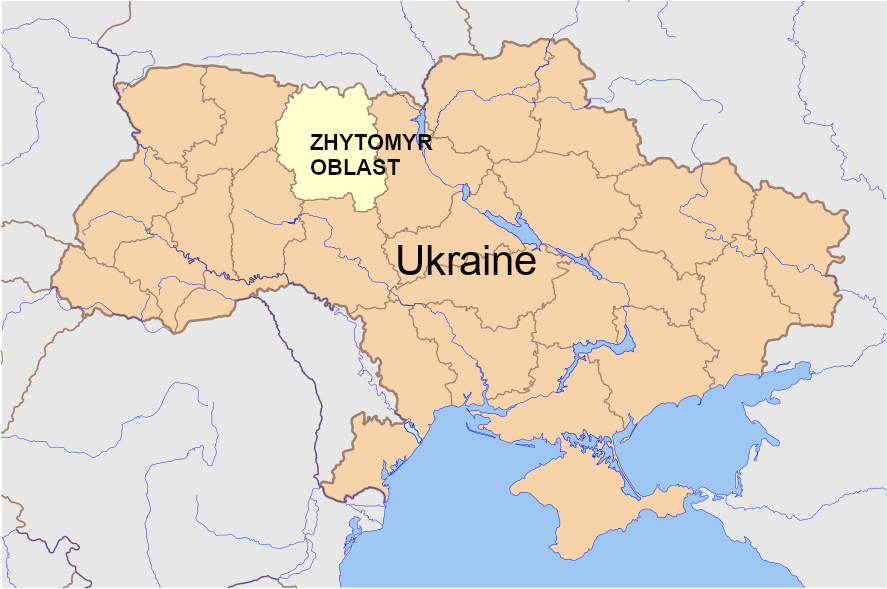
A major industrial hemp processing facility in north-central Ukraine will soon begin receiving its first harvest after a successful growing season, marking a significant step in the country’s ongoing revival of its historic cannabis economy. Developed by the Ma’Rijani Hemp Company, the facility is located at the Ma’Rizhany industrial park in the Zhytomyr region. The facility will initially focus on long fiber production for the textile industry.
The launch follows the first full cultivation season for the project, which saw industrial hemp grow to heights of 2–3 meters in nearby fields. Harvesting is now underway in fields within a 20-kilometer radius of the industrial park, where more than 1,600 hectares are available for cultivation. While it is unclear how much of this total area contributed to the current production batch, the harvest marks the beginning of full-scale operations at the new facility.
In a March 2025 update, the company said it had agreements to source hemp from 700 hectares, aiming to increase that to at least 1,200 hectares by signing long-term contracts with local farmers.
“Centuries of Ukrainian cannabis tradition are revived after decades of oblivion and prohibition,” said Ma’Rijani representative Dmytro Kysylevskyy in a recent Facebook post. “It’s a better financial guarantee for the farms that will become partners of the industrial park.”
Goals for expansion
The factory’s current processing capacity exceeds 10,000 tons of hemp biomass annually, with plans to scale up to 20,000 tons by expanding cultivation to 4,000 hectares.
Kysylevskyy said the company is encouraging local growers to shift from “unstable and politicized grain supplies to the European Union” toward hemp, which he described as a more reliable, locally anchored opportunity. Recent tensions between Ukraine and some of its EU neighbors—especially Poland, Hungary, and Slovakia—over grain exports have sparked trade restrictions and farmer protests, drawing the agriculture sector into a broader political conflict.
That politicization also extends to hemp seed after a senior anti-corruption official was recently arrested for allegedly helping his father export 20 tons to Russia in violation of wartime trade bans. The case exposed enforcement gaps and lingering corruption risks despite new transparency measures.
Platform for industry
Initial output planned from the Ma’Rizhany plant includes high-quality technical long fibers for textiles and shorter fibers for nonwoven applications such as insulation and paper. Plans include eventually capturing hemp hurd for construction materials.
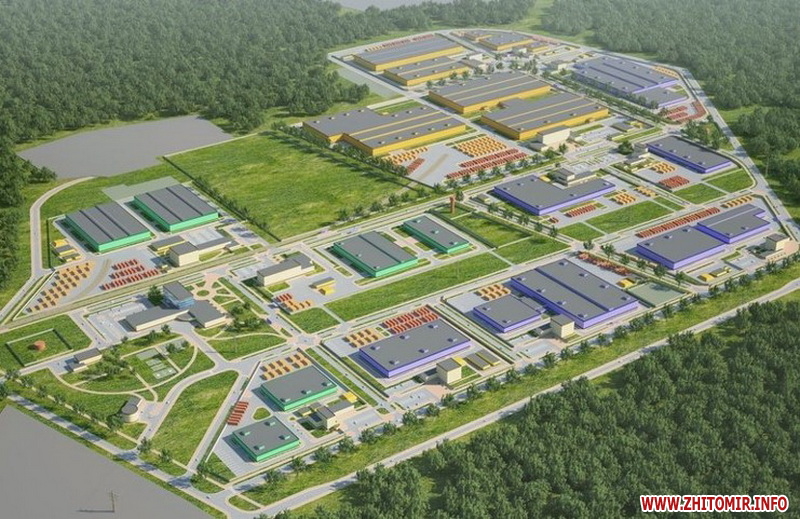
The Ma’Rizhany industrial park is envisioned as a hub for innovation in hemp-based production. With space available for expansion, the project aims to attract secondary processors to convert raw materials into finished goods such as yarn, packaging, sustainable paper, and insulation.
Built on the grounds of a former flax mill, the factory represents a $25 million investment to date. If fully realized, the site could eventually employ 700 workers and support processing of 12,000 tons of hemp biomass annually, with total investment projected at $100 million.
Laying the groundwork
The project is part of a broader national push to reestablish Ukraine as a global leader in hemp production, supported by regulatory reforms and growing global demand. Ukraine’s adoption of a medical cannabis law and rollout of an electronic hemp registry have streamlined bureaucracy, allowing hemp to be treated like any other agricultural crop.
With projections of steady growth, hemp acreage in Ukraine could climb from an estimated 3,000 hectares this year toward 8,000 hectares in future seasons. While actual figures remain uncertain due to ongoing conflict and environmental risks, the launch of industrial-scale processing in Zhytomyr is seen as a major milestone.
“Demand for hemp fiber on the global market is growing,” said Kysylevskyy. “That gives us real momentum.”