
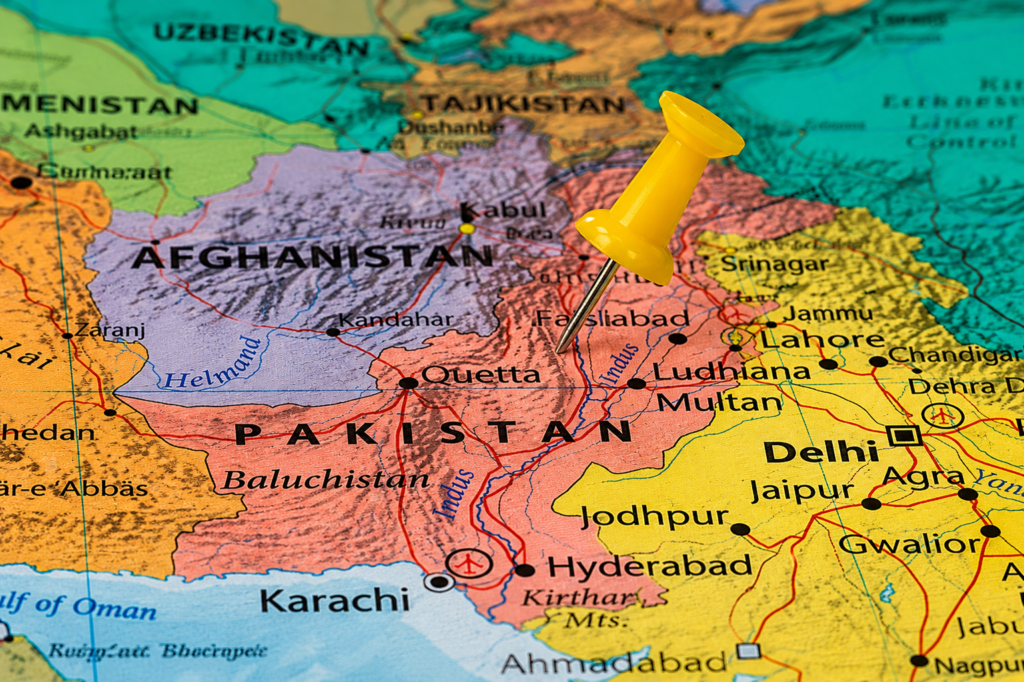
Pakistan’s textile industry risks repeating decades-old mistakes by exporting low-value hemp fiber while overseas brands capture the highest profits from design, branding, and retail, according to one of the country’s leading voices on textile policy.
Instead, the country should build a fully integrated domestic hemp apparel industry, from licensed cultivation through branded exports, says Shahid Sattar, former secretary general of the All Pakistan Textile Mills Association (APTMA).
In an analysis published in The News, he argues that recent regulatory reforms have created an opportunity for Pakistan to move beyond commodity exports into higher-value hemp apparel, particularly denim.
Regulatory changes underpinning that opportunity have unfolded over the past two years. Pakistan established the Cannabis Control and Regulatory Authority (CCRA) in 2024, followed by implementing rules in the province of Khyber Pakhtunkhwa and the subsequent rollout of a national licensing and policy framework.
Those measures, Sattar argues, provide the legal foundation international buyers require for traceability, certification and regulatory compliance.
The question now is whether the country’s textile manufacturers will invest quickly enough to capitalize on the moment, according to Sattar, who served for eight years as APTMA’s secretary general until the end of 2025.
Value chain
Rather than exporting hemp as a raw or semi-processed commodity, Sattar says Pakistan should retain value at every stage of production by developing domestic capabilities in seed selection, fiber extraction, degumming, spinning, weaving, dyeing, garment manufacturing, certification, branding and export marketing.
Without that integrated approach, he warns, Pakistan could simply become another supplier of inexpensive raw material while foreign apparel companies capture the higher-margin business associated with finished products and global brands.
“The opportunity now is for Pakistan’s denim and jeans manufacturers to act before the chain becomes fragmented, captured by traders, or diverted into low-value raw-material sales,” Sattar wrote. “The time for jeans manufacturers, denim mills, spinners, farmers, processors and exporters to form alliances is now.”
Market focus
Sattar identifies hemp-cotton denim as the most practical entry point, recommending initial blends of roughly 30% hemp and 70% cotton for commercial production before moving toward higher hemp content in premium collections.
He argues Pakistan should target Europe, the United Kingdom and North America, where sustainability requirements, traceability standards and consumer demand are driving growth in hemp-blend apparel. Those markets already account for much of Pakistan’s textile business, potentially giving exporters an established customer base for higher-value products.
He also urges manufacturers to invest early in certification systems and documented supply chains, contending that international buyers increasingly require verifiable information covering licensed cultivation, processing, transportation and regulatory compliance.
Closer collaboration
Beyond individual company investments, Sattar recommends closer collaboration among farmers, processors, spinning mills, denim manufacturers, garment exporters and investors through offtake agreements, joint ventures and research partnerships designed to accelerate commercialization.
He also argues that leading textile companies should help shape the emerging supply chain rather than wait for it to mature independently, including investments in fiber processing, spinning trials and product development.