
Spain and Portugal are launching a joint initiative aimed at developing an array of applications in continuing efforts to kickstart a viable hemp economy in the Iberian Peninsula.
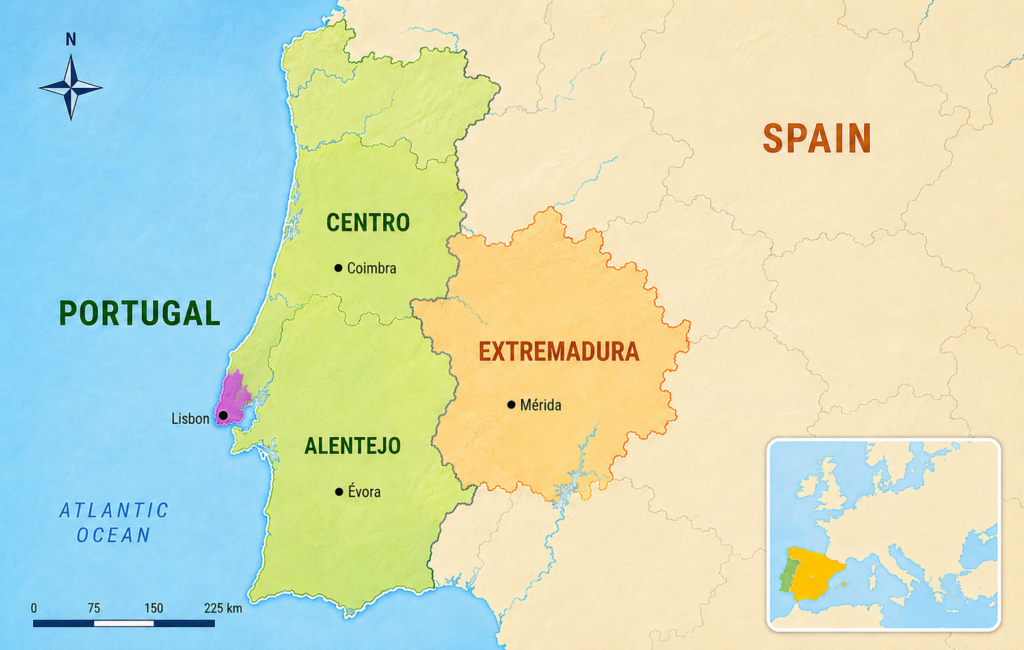
The project, called HEMPVALUE, is led by the Center for Scientific and Technological Research (CICYTEX) in Spain’s Extremadura region, and brings together regional authorities, research institutions and technology centers from Extremadura and the cross-border Portuguese regions of Alentejo and Centro.
Project organizers said the initiative aligns with broader EU sustainability and green-transition policies focused on renewable materials, waste reduction and low-carbon industrial systems, and is intended to support complete utilization of the crop while creating new economic opportunities in rural regions facing population losses.
Broad scope
The three-year initiative, with a budget of more than €1.3 million under the EU-backed POCTEP territorial cooperation framework, runs through 2028.
The program addresses the entire industrial hemp value chain, from cultivation and varietal testing to industrial processing for commercial applications such as bioplastics, 3D-printing materials and construction products. It also includes research into hemp byproducts for biogas and pellet production while exploring hemp grain for food and animal feed.
The project represents the latest attempt by stakeholder institutions to position hemp as part of broader sustainability, rural-development and circular-economy strategies.
Ongoing efforts
Spain has periodically promoted industrial hemp through regional innovation programs and research initiatives, particularly in Extremadura, where authorities and research centers have sought to establish hemp as a strategic crop tied to green-industry development.
One of the most prominent earlier efforts was a hemp innovation initiative launched in 2020 by the National Agri-Food Technology Center of Extremadura (CTAEX) and Bhalutek Hemp.
The effort appears to have later evolved as part of regional programs grouped under what organizers called a “Hemp Technology Pole,” focused on research, agronomic development, training and institutional coordination around industrial hemp.
Current status
Industrial hemp activity in the two countries is small compared to major European producers such as France. Publicly available figures for Spain vary widely, with estimates in recent years suggesting hemp fields total well below 500 hectares – a peak reported in 2020.
Most hemp activity in Spain is in experimental cultivation, seed production, cannabinoids, small-scale fiber initiatives and research projects. Interest in hemp construction materials has grown slowly, with several pilot projects and small-scale hempcrete developments emerging in recent years
Spanish operators have continued to report regulatory uncertainty tied to enforcement practices, licensing interpretation and the overlap between industrial hemp and cannabis controls.
Publicly available figures for hemp cultivation in Portugal also remain limited and inconsistent, reflecting the sector’s relatively early stage and fragmented structure. Reporting from the General Directorate for Food and Veterinary Affairs (DGAV) suggested planted area expanded from roughly 68 hectares in 2023 to nearly 500 hectares in 2025, although comprehensive official multi-year cultivation statistics remain difficult to obtain.
Cross-border partners
The HEMPVALUE project brings together seven institutions from Spain and Portugal covering agronomy, materials science, energy and industrial applications. Along with CICYTEX and CTAEX, the consortium includes INTROMAC, the Polytechnic Institutes of Portalegre and Leiria, the Institute for Research and Technological Development in Construction, Energy, Environment and Sustainability (ITECONS) in Coimbra, and CENTIMFE, Portugal’s technology center for molds, tooling and plastics.