
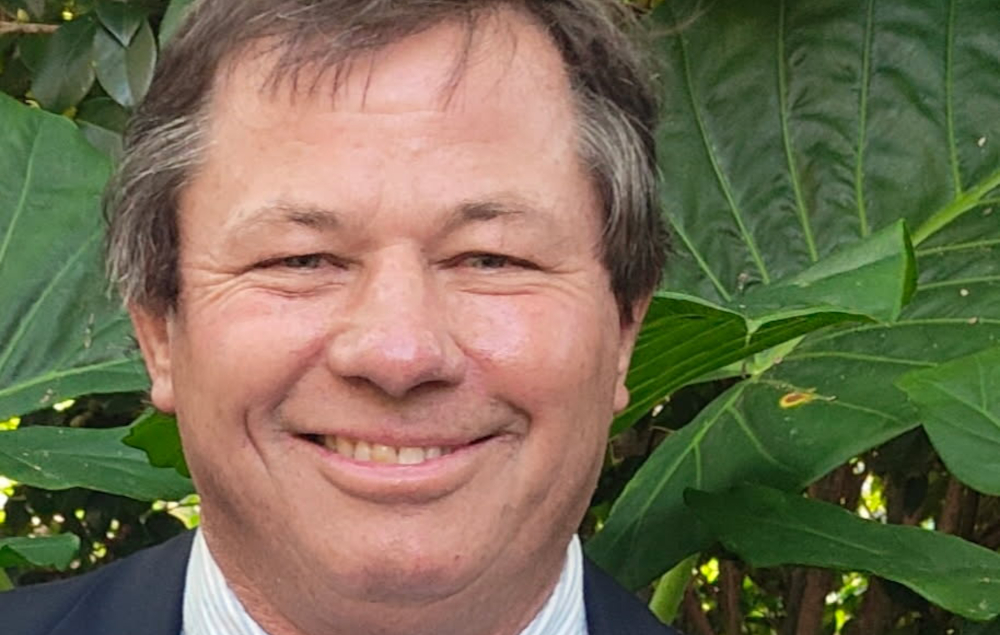
INTERVIEW: Tim Schmidt is a Tasmanian farmer, director of The Tassie Hemp Co. and one of Australia’s leading industrial hemp advocates. Founding president of the Australian Hemp Council (2020-2025), he grows hemp and grass seed and raises 1,000 head of cattle on his family’s farm, while championing processing infrastructure, practical regulation and new markets for hemp foods, fiber and construction materials. Schmidt was the prime mover in initiating the Australian Senate inquiry into the hemp industry, which is due to release its report at the end of this month.
HempToday: The Senate inquiry’s submission deadline is approaching. What outcome would you consider a success?
Tim Schmidt: First, I’d like to see the government establish a legislated definition of hemp, have it removed from the National Poisons Schedule and to be administered by the Department of Agriculture Forestry and Fisheries. We have institutions and regulatory authorities already in place to manage end user consumer product safety.
We also need a major boost in funds for research and procurement support for the industry, and to establish a national advisory taskforce to ensure the government makes informed policy decisions.
At the cultivation level we need material control for low THC hemp to be deregulated with the exception of hemp varietal monitoring to ensure crops planted are low THC varieties; this can be managed through a seed production registration system.
HT: Australia has strong research and growing interest, but processing still lags. What is the single biggest obstacle to building regional fiber hubs?
TS: The single biggest obstacle to building regional fiber hubs is lack of confidence. By this, I mean that no investor or group of investors have the confidence at this stage to invest around $40 million into a regional hub. All the ingredients are there apart from confidence; we have the growers, logistics, emerging markets and processing facilities available to build, just not capital confidence. One of a number of solutions for this problem is for the government to provide an underwriting facility to support fundraising efforts.
My observation to date in Australia, is the mistaken idea that small ,inefficient decorticators are going to revolutionize the industry. Without scale and corporate investment, fiber hubs will only remain an aspiration.
HT: Housing, carbon and advanced materials are receiving much of the attention today. Which of those markets do you think will generate meaningful commercial demand first?
TS: Housing material supply. There are a number of companies working on this issue with a variety of housing material formulations being developed. The industry is very close to producing an ideal product, and there are a number of cabin/housing prototypes being built already.
With a major housing shortage across Australia and curtailing of the forestry industry, emergence of the carbon sequestration requirements, I believe the hemp industry is well placed to fill this emerging need.
HT: What lessons should Australia borrow from countries such as France, Germany and New Zealand?
TS: France’s most successful system is one built around a farmer owned co-operative operating a large-scale efficient production facility. This concept has been discussed from time to time in the Australian industry. Also, France has an effective national seed certification system that could be useful to apply in Australia. The establishment of industry product standards in France both for raw material and building codes are important facets from which Australia could learn.
Germany’s bio-economy initiatives integrate industrial hemp into mainstream manufacturing, including automotive, bio-composites and building materials. Australia can adopt this approach, leaning on recommendations to integrate hemp into national construction and circular economy supply chains.
In New Zealand, recent proposed changes to industrial hemp crop regulations, have recognized that low THC hemp is a low-risk crop and can be treated like any other commodity crops such as canola or flax.
HT: And what should it avoid copying?
TS: What we need to avoid are the excessive regulations that still inhibit whole of plant use and deprives the industry of supplementary revenue streams that boost profitability.
HT: Looking five years ahead, what will success look like in measurable terms – hectares, processors, manufacturing capacity, exports or something else?
TS: Successful establishment of a major regional fiber hub with large scale efficient processing servicing a building industry and other evolving markets for innovative hemp derived consumables. Part of this may include export of raw material to Asia, we know a market for bast material already exists in China where some Australian product has already been sent.
HT: What first persuaded you personally to plant hemp?
TS: I saw an article in the local paper on a field day in around 2011. At the time I was looking for suitable crops to add to my farming rotation and hemp was a perfect fit. Since then, I discovered that the more you learn of this crop, the more fascinating it is to know of its array of benefits and features.
HT: What are the greatest practical challenges in turning Australian-grown hempseed into consistently profitable branded food products?
TS: The two main factors to overcome include consumer awareness and production yields. Crop yield is easily the greatest lever for profitability for both growers and processors. Getting the cost down for the consumer is key and increased production yields is the best way to achieve this. There are a number of companies in Australia working on improved genetics, although these improvements take a lot of time to bear fruit.
Consumer awareness is very limited at the moment, consumer research has shown that there is significant latent demand yet to be tapped, once the education process is accomplished. Currently market growth in the food sector is quite robust, running at least 15% per anum or more. I look forward to the day when an uneducated consumer won’t want to ask me if a hand full of hemp seed will make them high.
HT: Finally, what message would you like to send to policymakers who still see hemp as a niche crop rather than a strategic industrial resource?
TS: In 1998 Canada legalized the commercial production of industrial hemp, Australia also had this opportunity, but declined. Canada’s industry is now worth around AUD $587M, Australia’s might be around $2M, surely there’s a message in this outcome.
Australia has the potential to become the world leader in industrial hemp production and innovation. Change in government policy to support the industry rather than hold it back is the key enabling factor for us to successfully achieve this outcome.